
The Venice Design Biennial has manifested every two years since 2016 as a collection of design exhibitions in Venice, Italy, running concurrently with the Architecture Biennale. It takes shape in the form of a Main Group Exhibition possessing a transient theme, a series of Collateral Projects spread throughout the city, and Platform, a digital journal compiled to connect the international design community to the Venetian design hub. The array of sporadic and secluded venues comprising the design forum guide attendees and enthusiasts down paths less travelled, through corners and crevices of the ancient city often overlooked by the everyday foot-traffic. This year’s poignant theme, as proposed by the Biennial project’s founders and curators, Luca Berta, and Francesca Giubilei, is Extinction/Salvation.
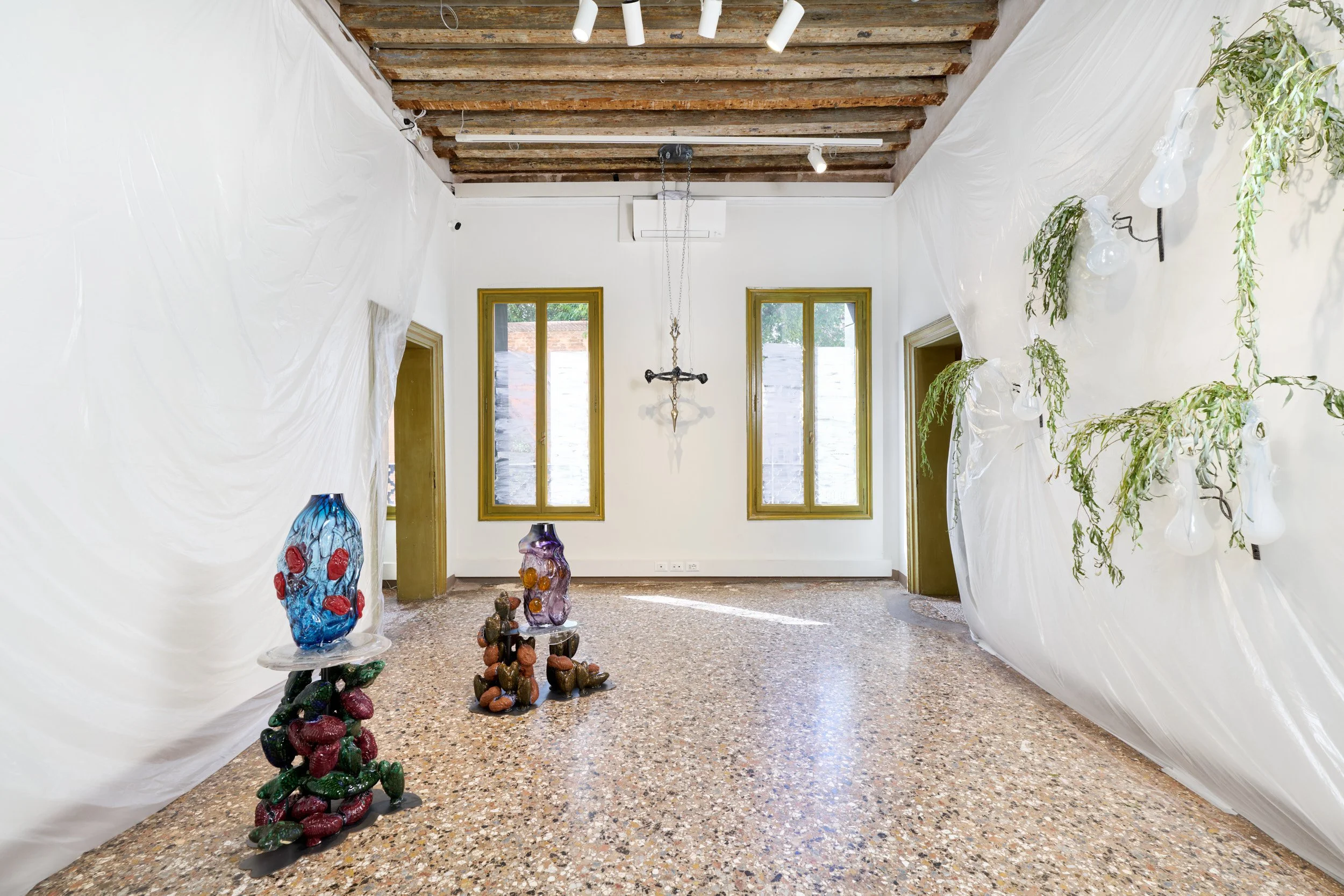
Artworks exhibited under this collective title will be divided between two categories; Glass, and Collectible. Ruth’s sculptural installation falls under Glass, thereby selected to become a temporary resident of the terrazzo-floored, green-doored, SPARC* – Spazio Arte Contemporanea – a historic Venetian apartment-turned-gallery (and home of VeniceArtFactory) in the heart of the city, a heartbeat away from the Grand Canal’s Ponte dell’Accademia. Here, Where the Wild Natives Grow found itself housemate to works by fellow designers of international renown, Anna Jožová, Anna Resei with IN Residence and Vetralia Collectible, Ans Bakker, Bloko 748, Elinor Haynes, Emilie Lemardeley, ERLANDS & BAI BAI, ·ET·TV·BRVTE·STVDIO·, Florian Post, Jessica Rimondi, Lucia Massari, Maria Koshenkova, and Vesta Rugilė Nausėdaitė.
Extinction/Salvation comes at a time where humanity, our ecosystem, or society, faces upheaval, transformation, and change; where it feels we are hurtling ever more rapidly towards a climactic, cacophonic schism. We teeter on the edge of a precipice plunging into an indeterminable fate, and our own actions will determine whether we fall or fly as we reach our inevitable conclusion, as they have since our very beginning. Do we rebel when faced with the reality of our self-constructed end, or do we resign ourselves to it? Planetary custodians, we are ultimately responsible for our own trajectory, and for who, for better or for worse, we take with us.
“Or perhaps on the contrary, we will all be saved. Thanks to the magnificent fates of science, or the advent of a god adapted to the standards of the Anthropocene.”
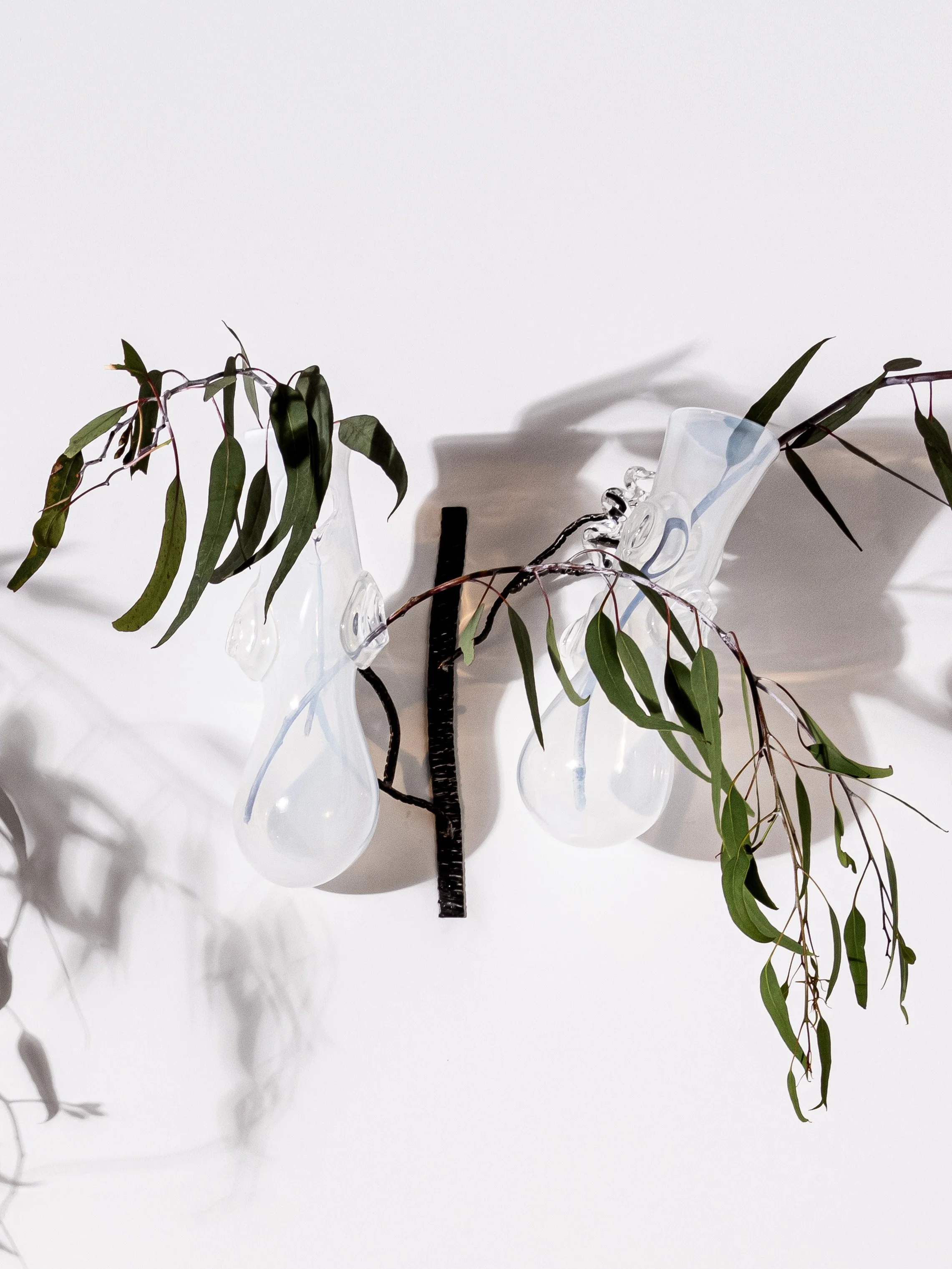
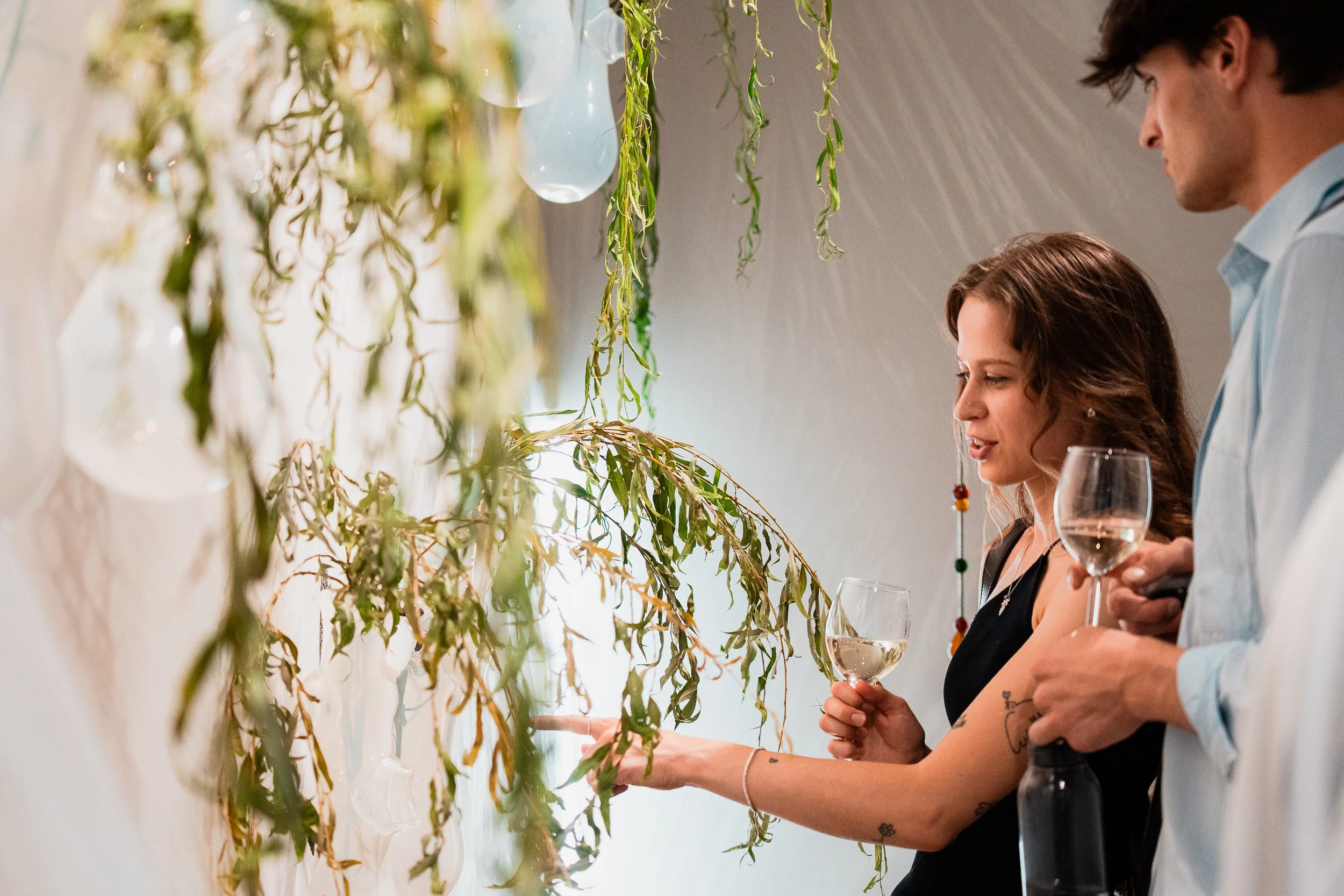
Addressing the underpinnings of the Anthropocene; the tangled realities of ecological collapse, material storytelling, and human responsibility – this is where Ruth pins the purpose of her work. As in the oppositional duality of extinction and salvation, Ruth creates work which speaks both to fragility and strength, grief and beauty, transformation and growth, amid the reality of globally unfolding ecological crisis. In her work, she champions environmental advocacy, cultural durability, and material curiosity. Where the Wild Natives Grow carries Ruth’s intentions to the Venice Design Biennale in the form of an installation – four pairs of glass receptacles each with their bespoke vinial (vine-like) hand forged steel wall mount. These reimagine the 17th-century elite status symbol, the ‘tulipiere’ (or tulip-holder, once regarded as an item of luxury), into something wilder, more bodily, and grounded in a distinctly Australian sensibility.
Where the Wild Natives Grow was exhibited originally as part of Flora at C Gallery, 2023