Nick Doran Adams
Born and raised in Ballarat, Nick Doran Adams was immersed in the world of art from a young age. His journey into glass began at Ballarat Grammar School, where he was introduced to the medium and immediately captivated by its unique blend of strength and fragility. Nick’s fascination with glass led him to pursue a Bachelor of Visual Art, majoring in glass at the School of Art, Australian National University, Canberra.
During his honours year in 2014, Nick was awarded the prestigious “Emerging Artist Support Scheme” residency at Canberra Glassworks. This opportunity allowed him to collaborate with a diverse range of artists, both local and international, and refine his skills across various glass techniques, from kiln forming to glass blowing.
In 2022, Nick brought his extensive experience and passion to Melbourne, joining Ruth Allen’s studio in Coburg. Here, he continues to explore his love for glass, appreciating its versatility and the dramatic transformation it undergoes from molten to solid. For Nick, working with glass is like a dance, where each movement and technique creates something beautifully unique.
Looking ahead, Nick dreams of creating a nostalgic installation piece inspired by the retro arcade settings of his childhood. He envisions using light and color to evoke a sense of nostalgia and playfulness, reflecting his ongoing love for the transformative power of glass.
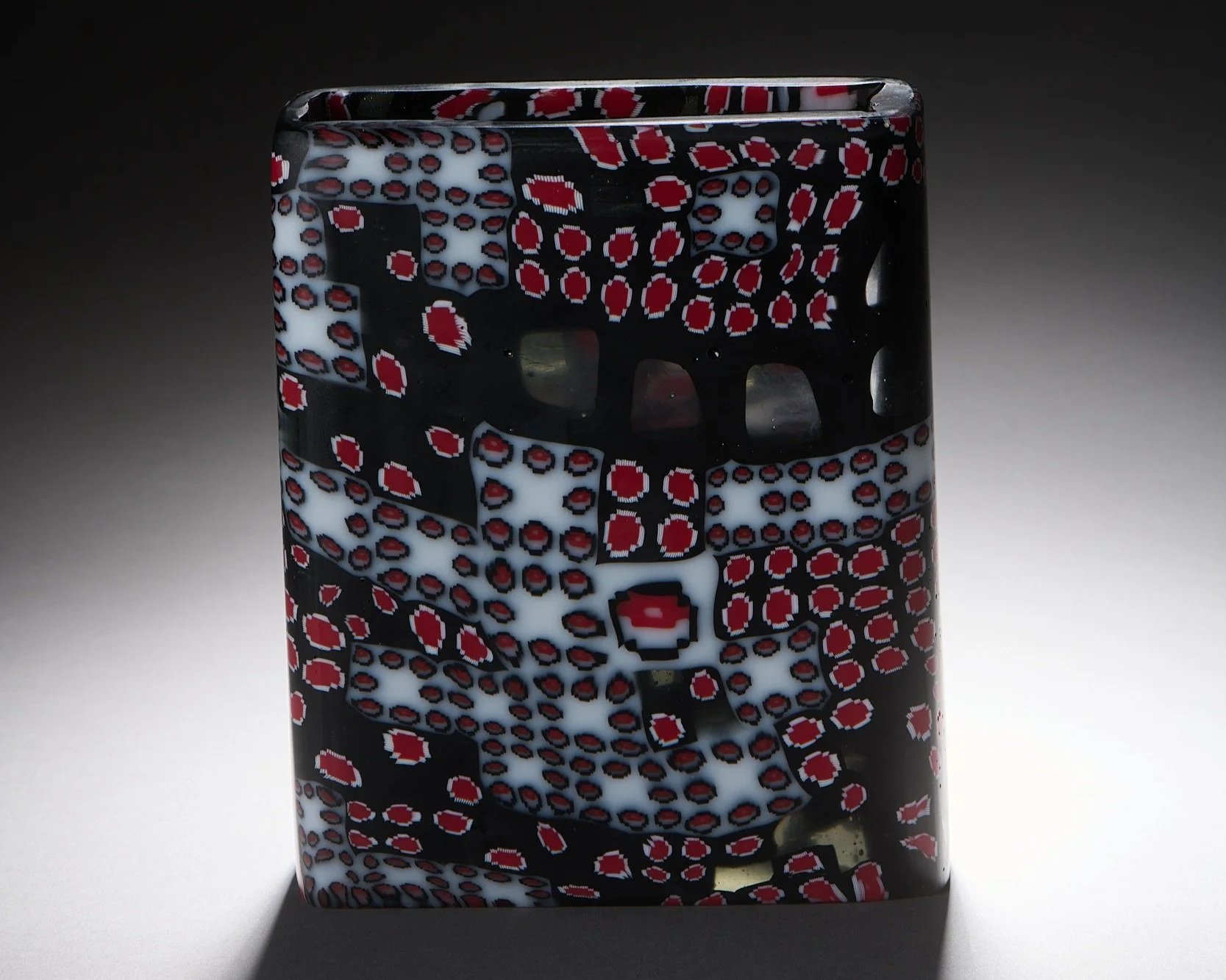
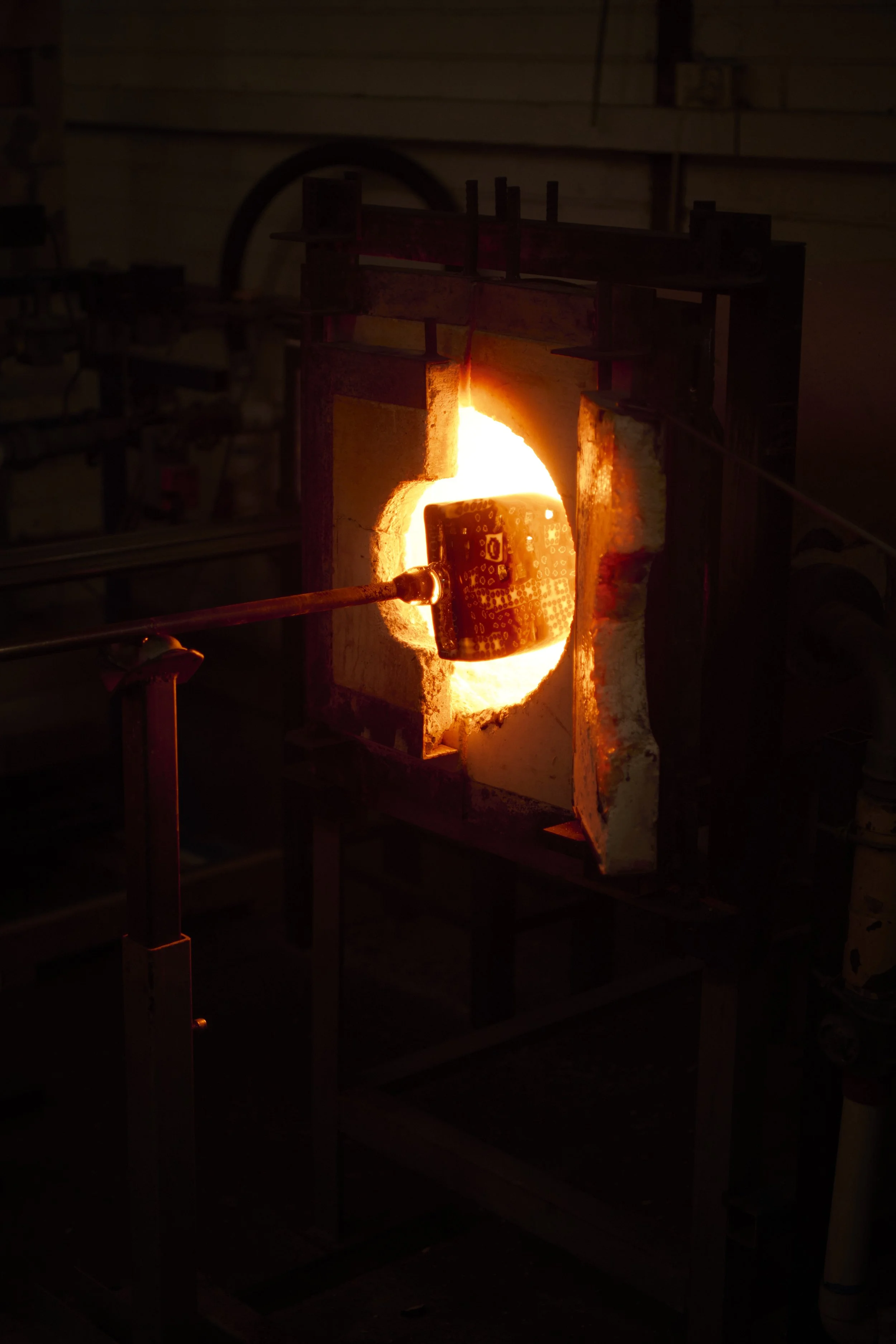
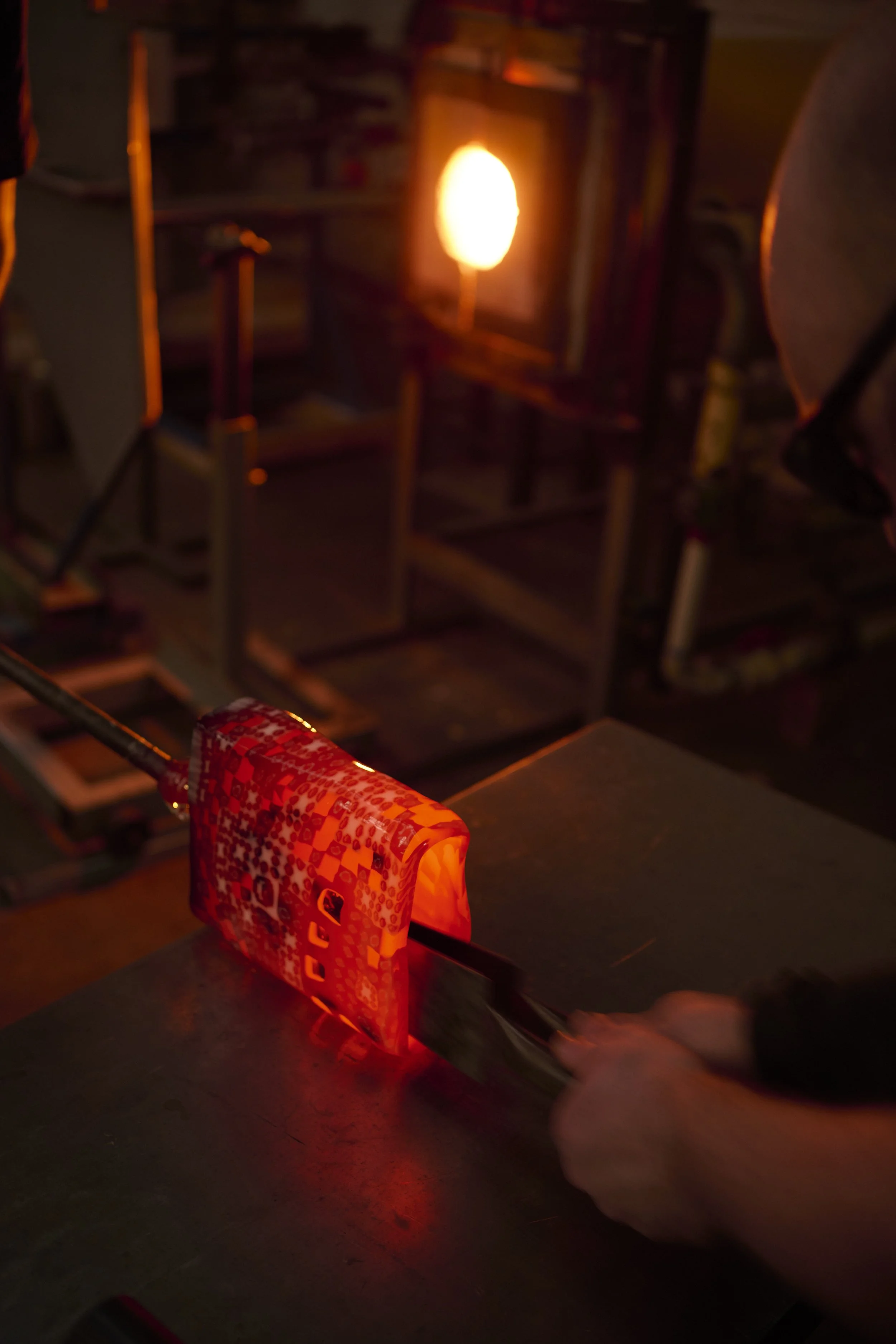
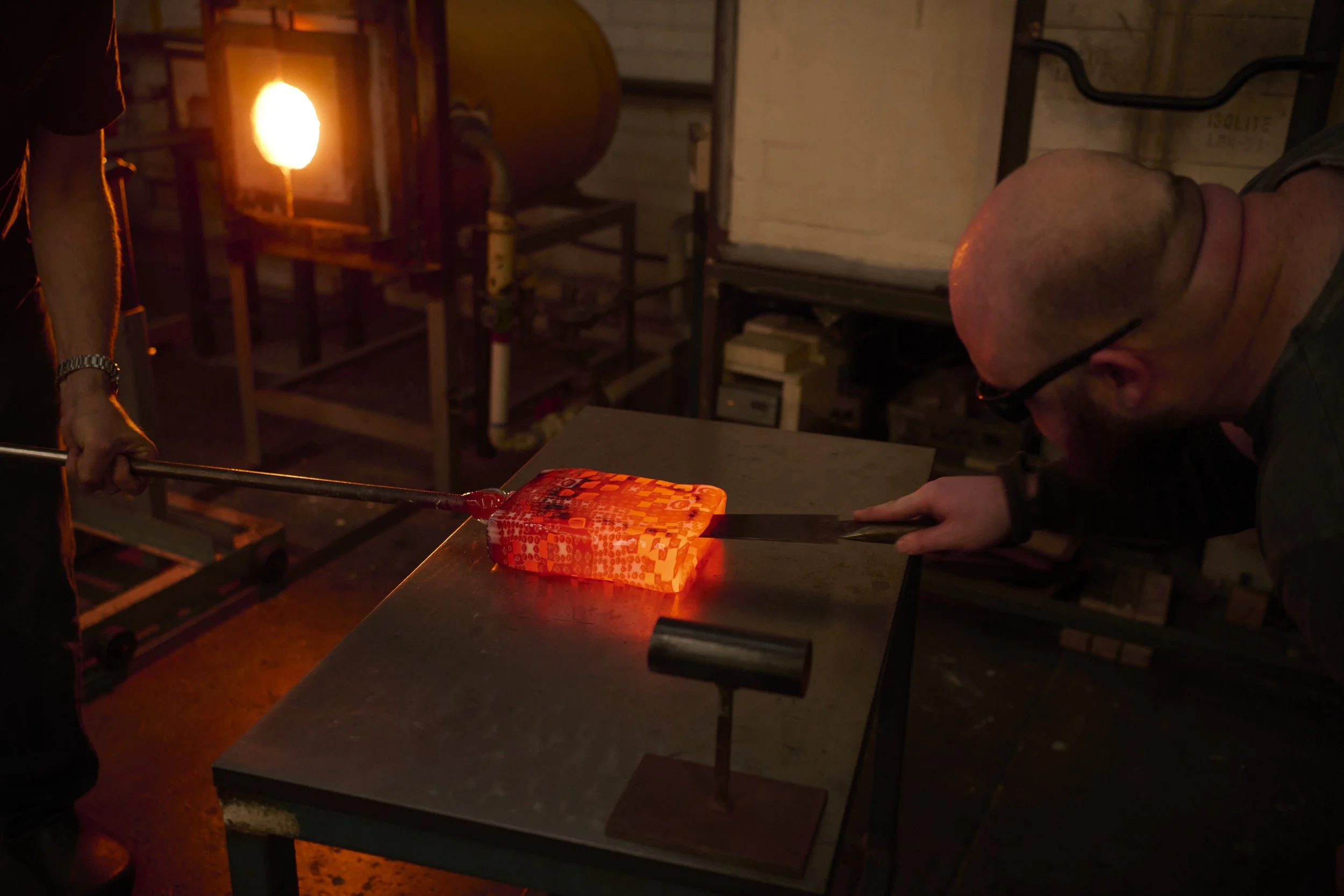
Cartridge, 2025. Hot formed glass vessel, surface worked, 200 H x 160 W x 60mm D. Photographed by Fred Kroh.
Nick’s Interview
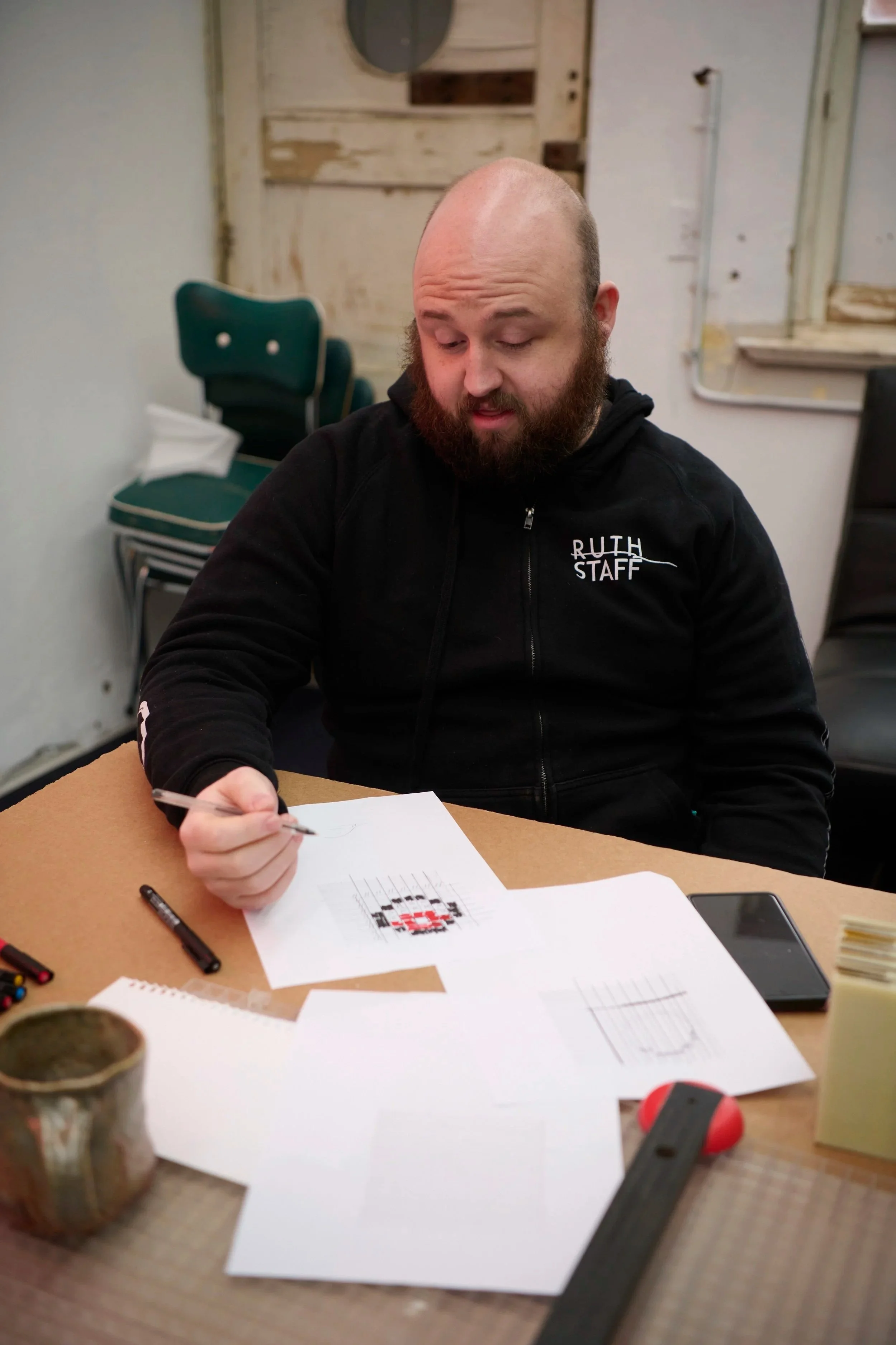
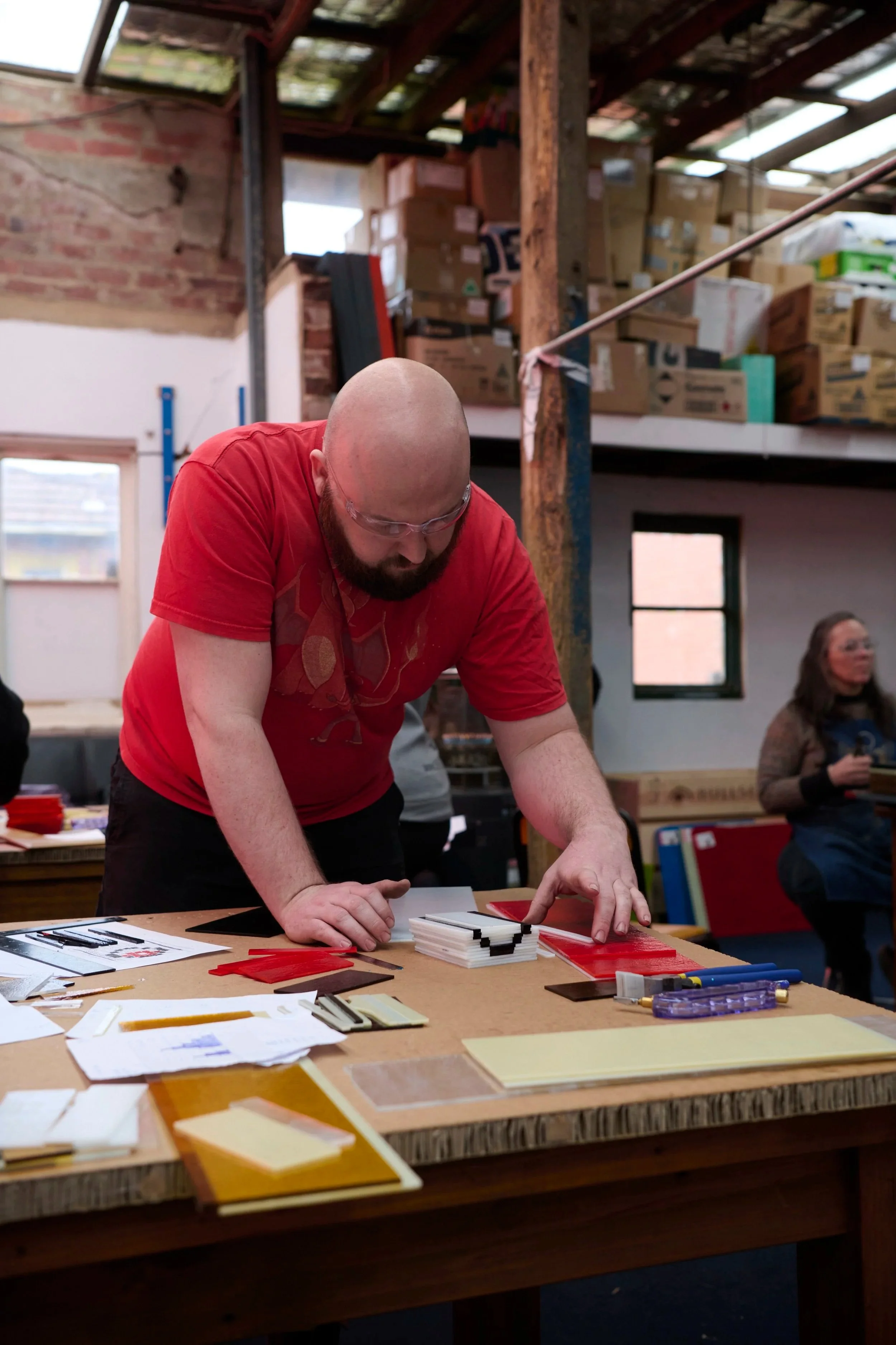
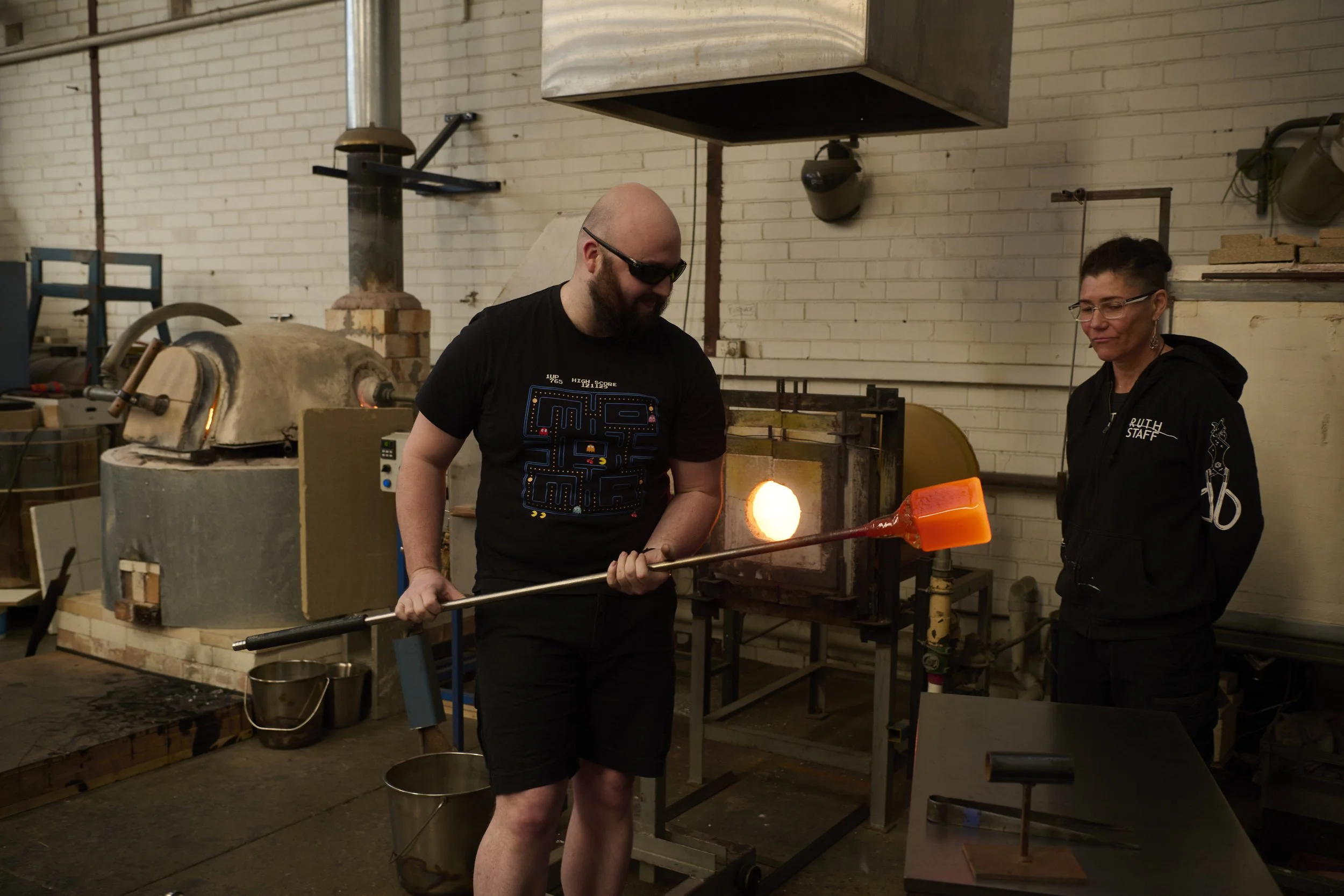
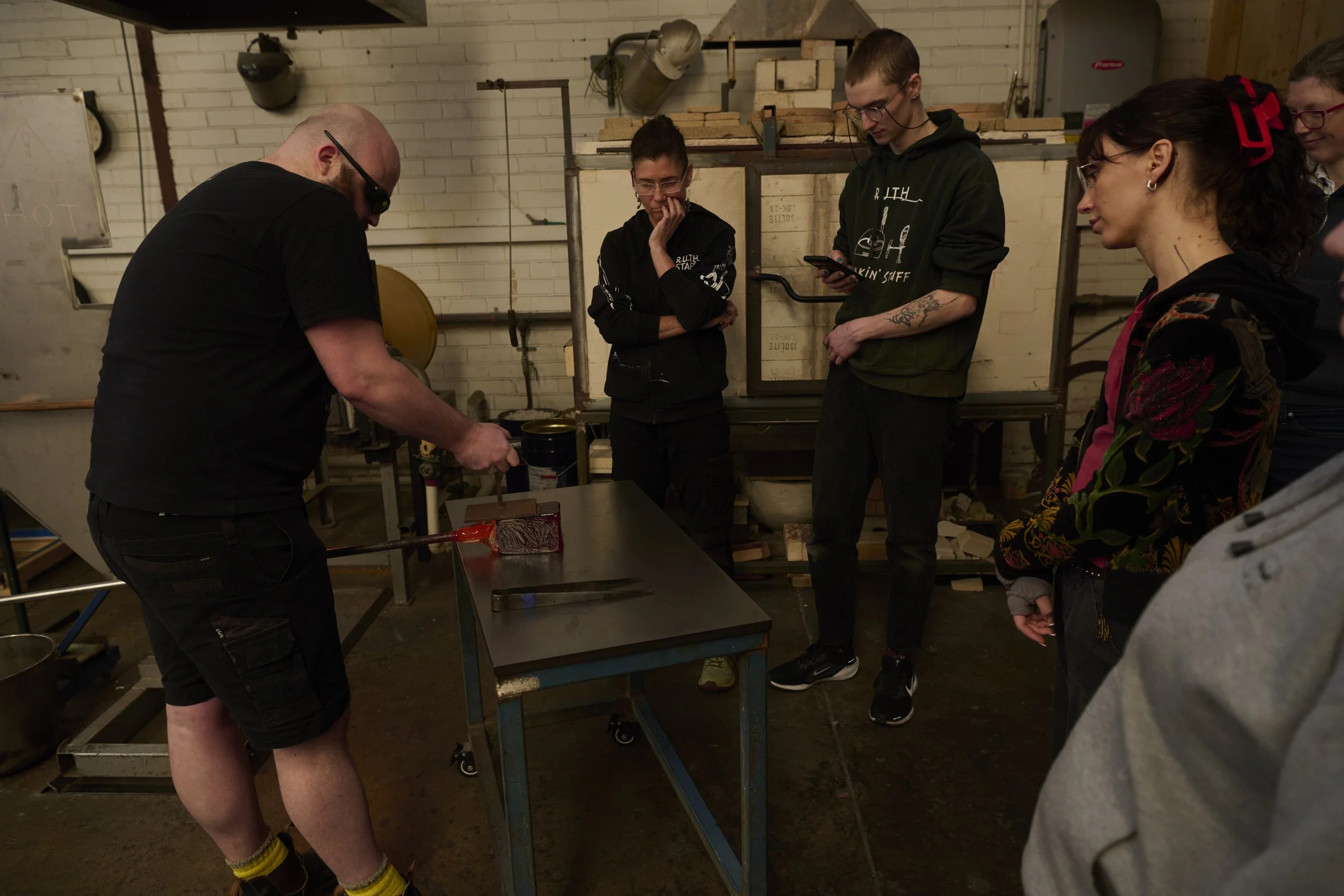
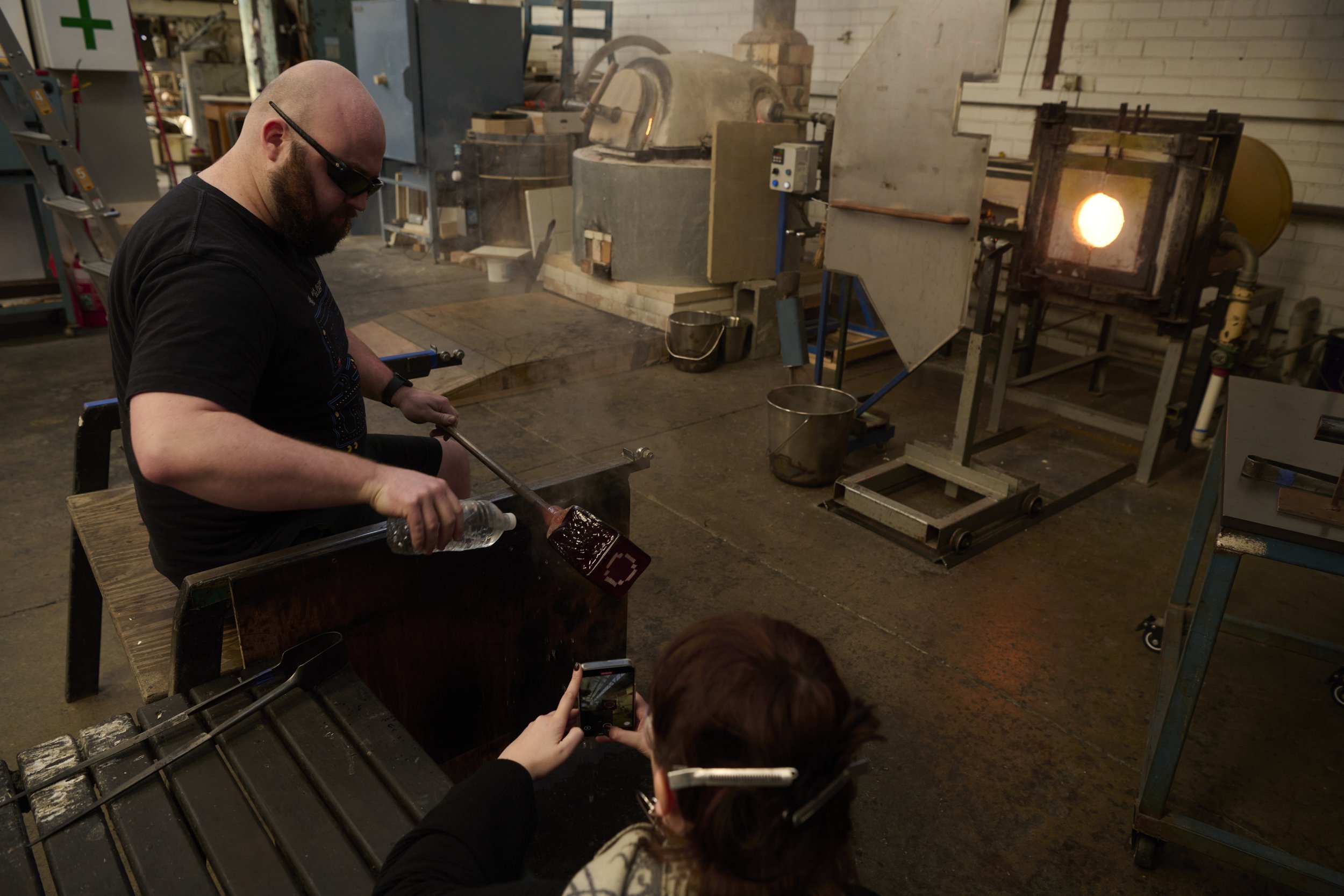
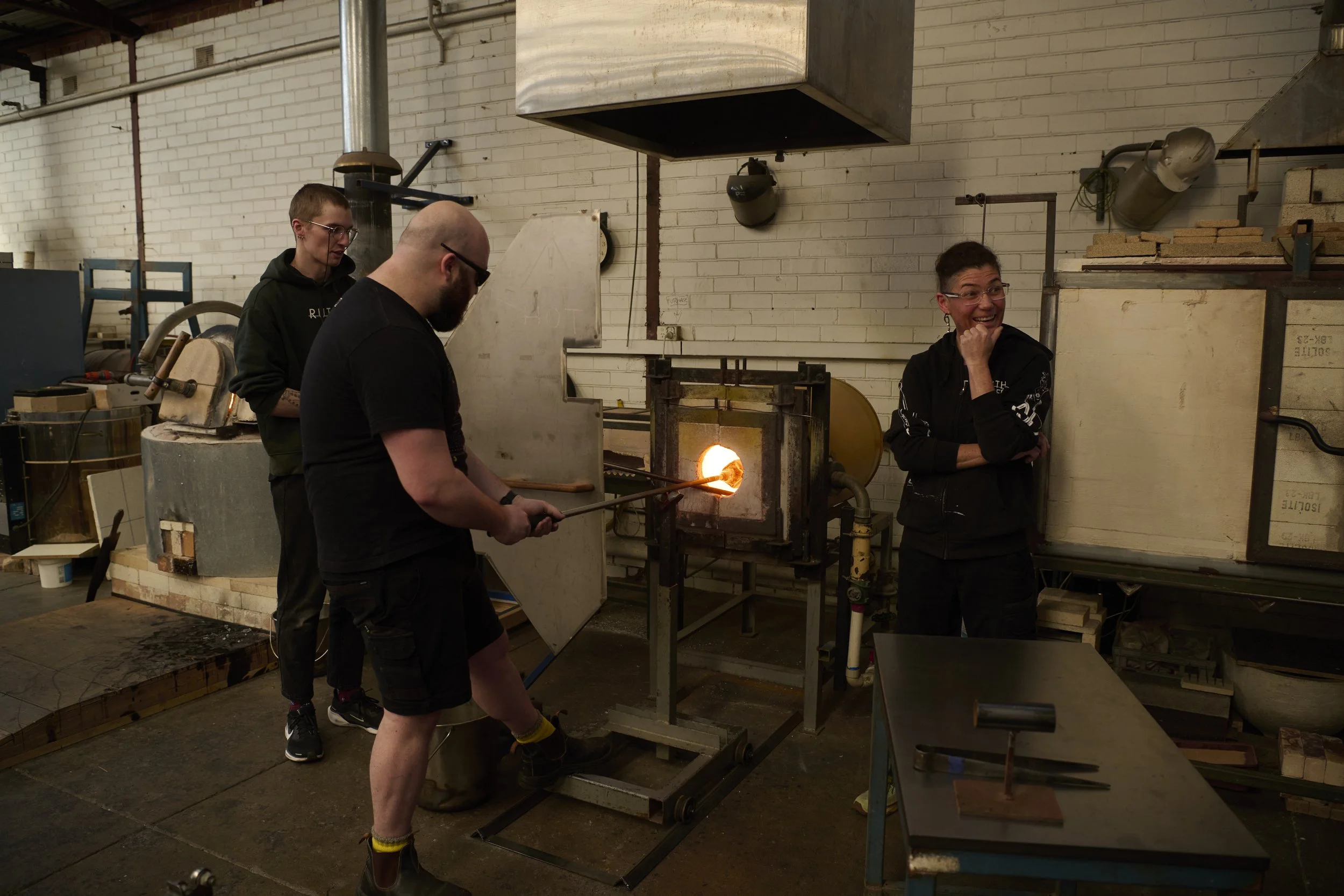
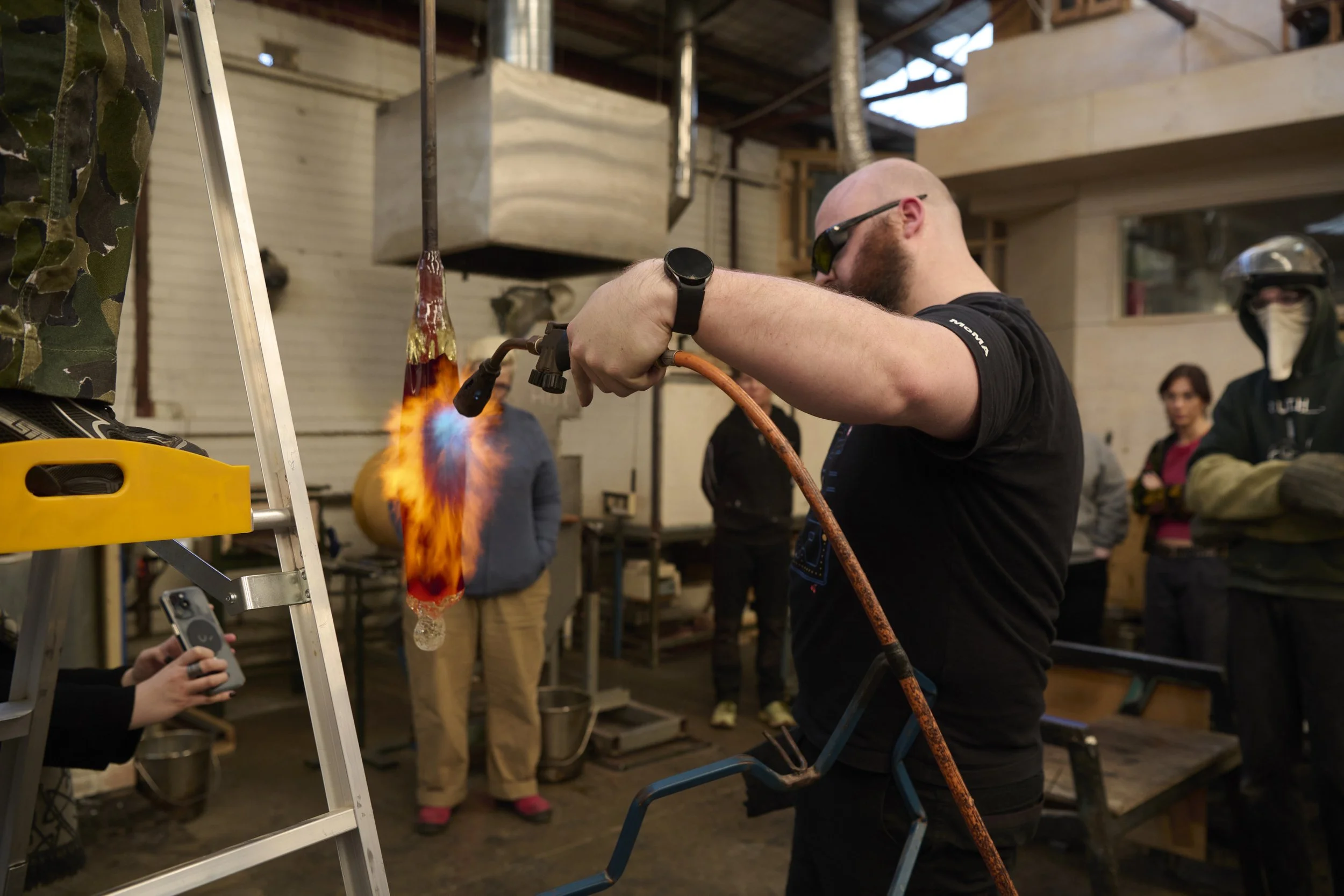
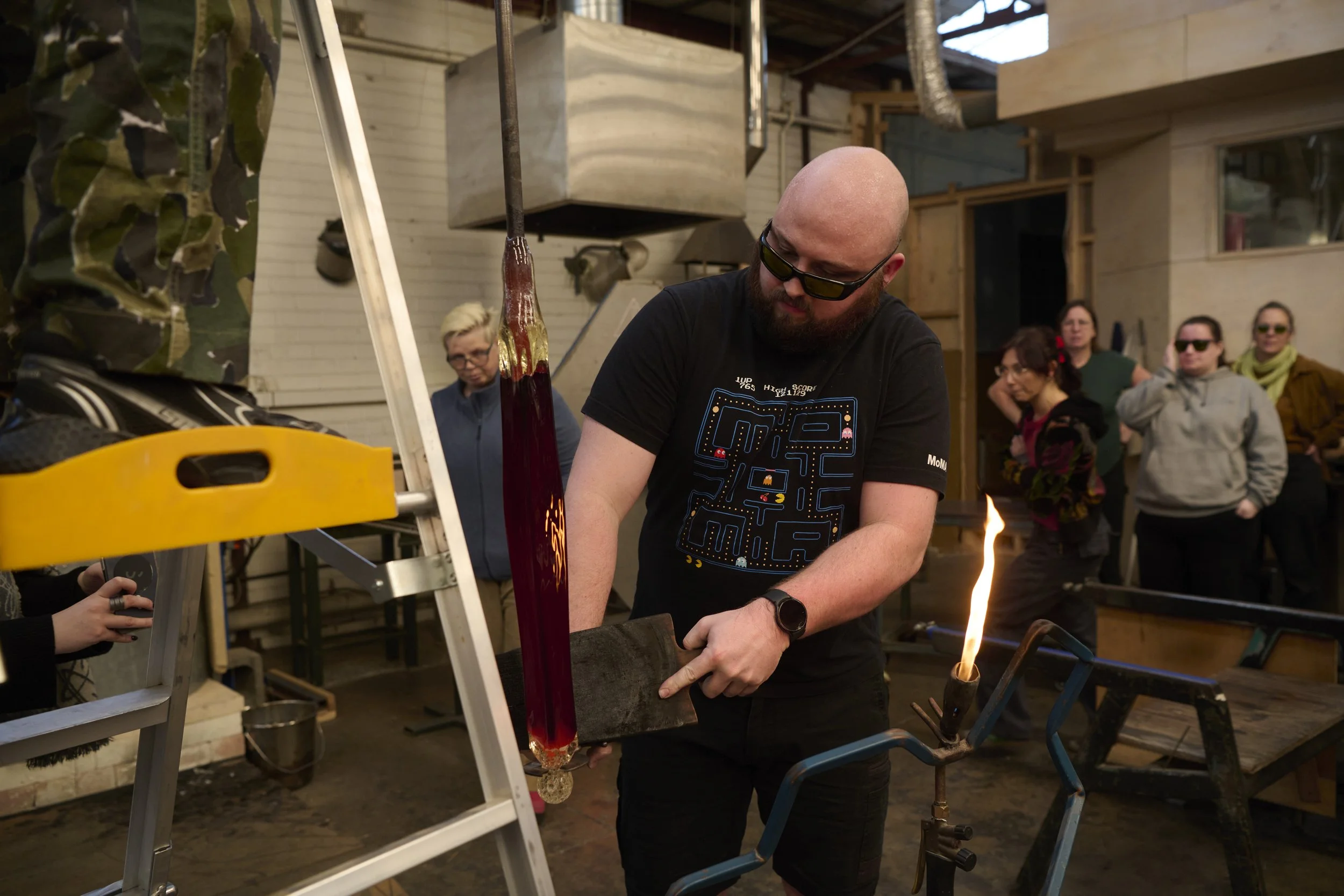
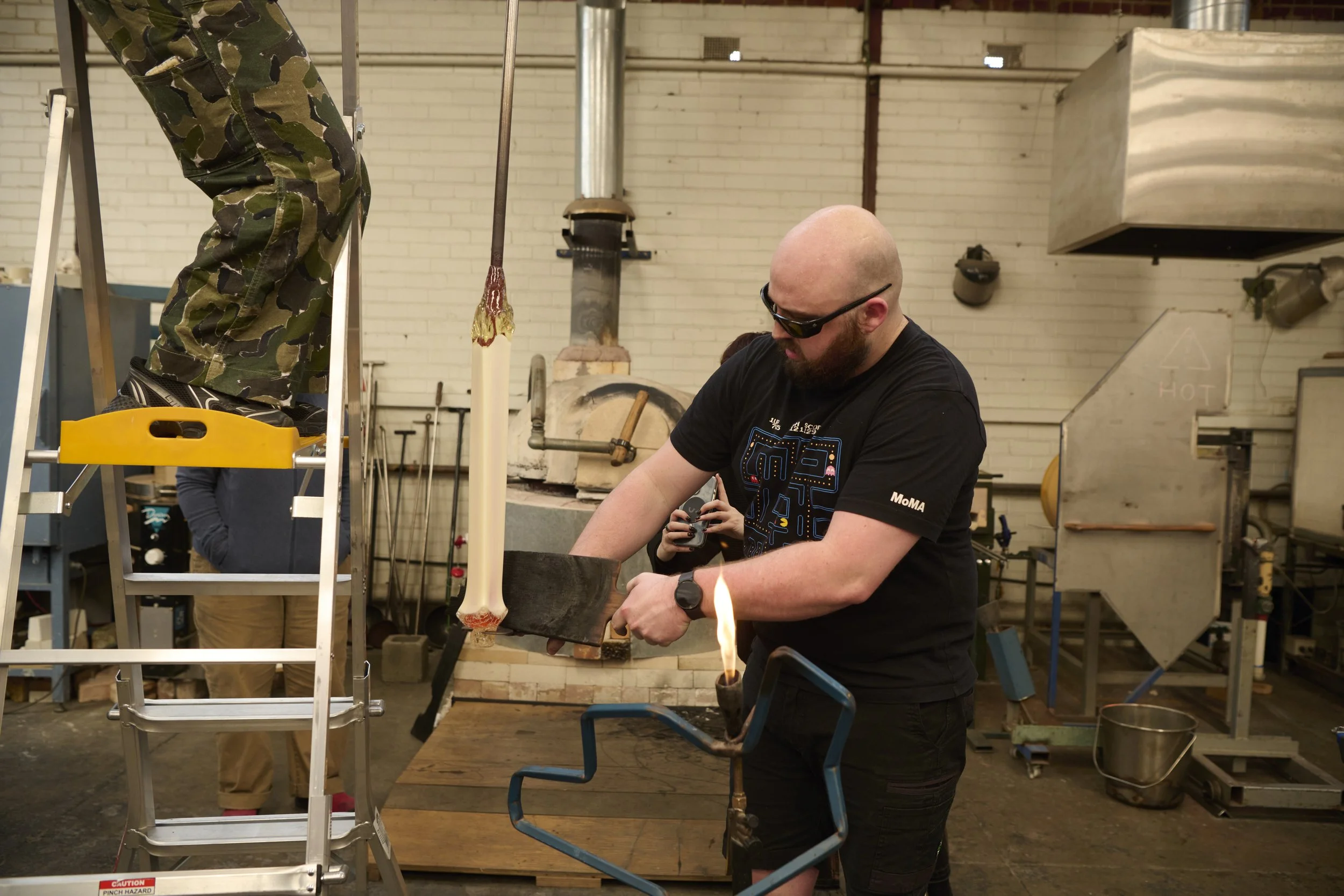
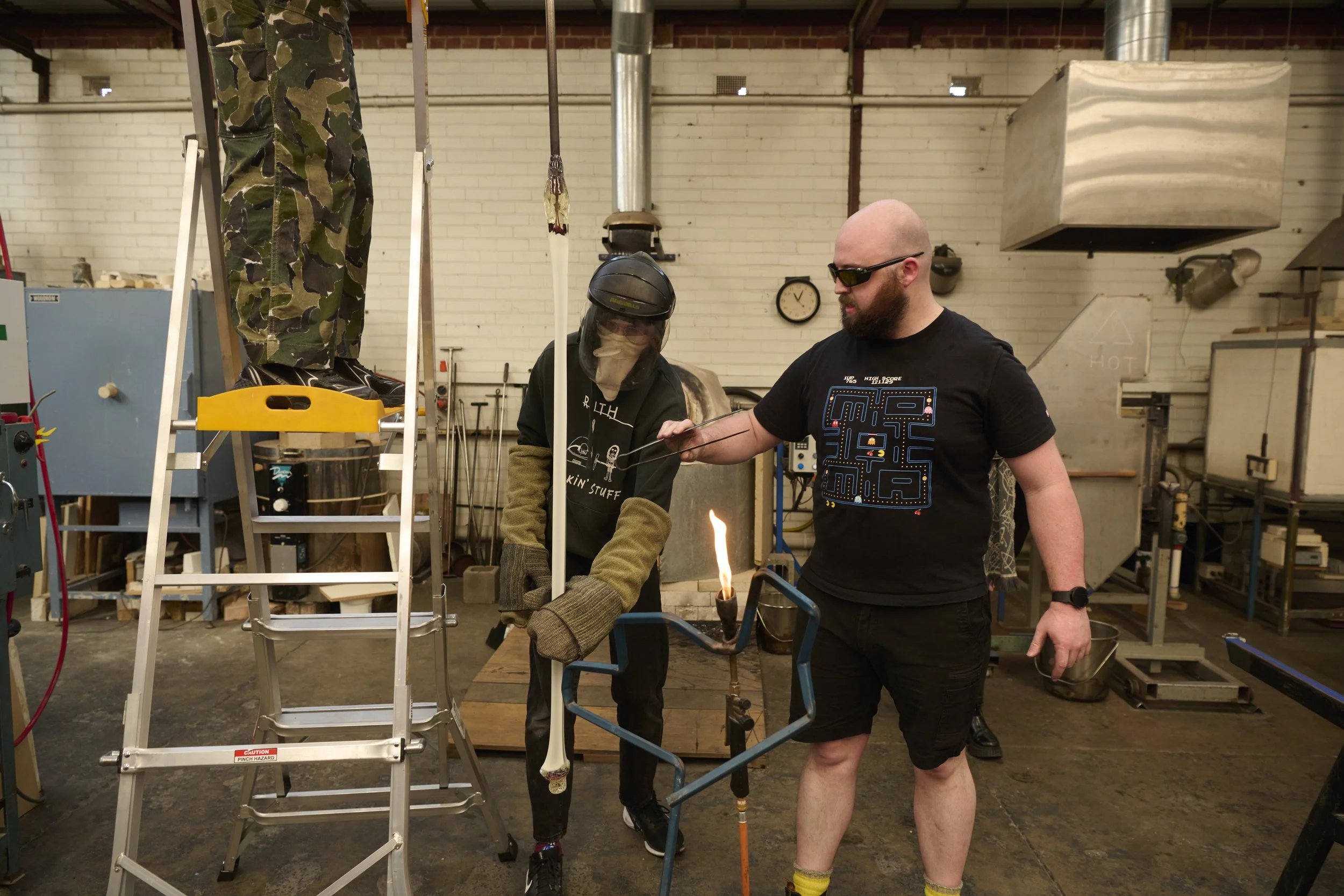
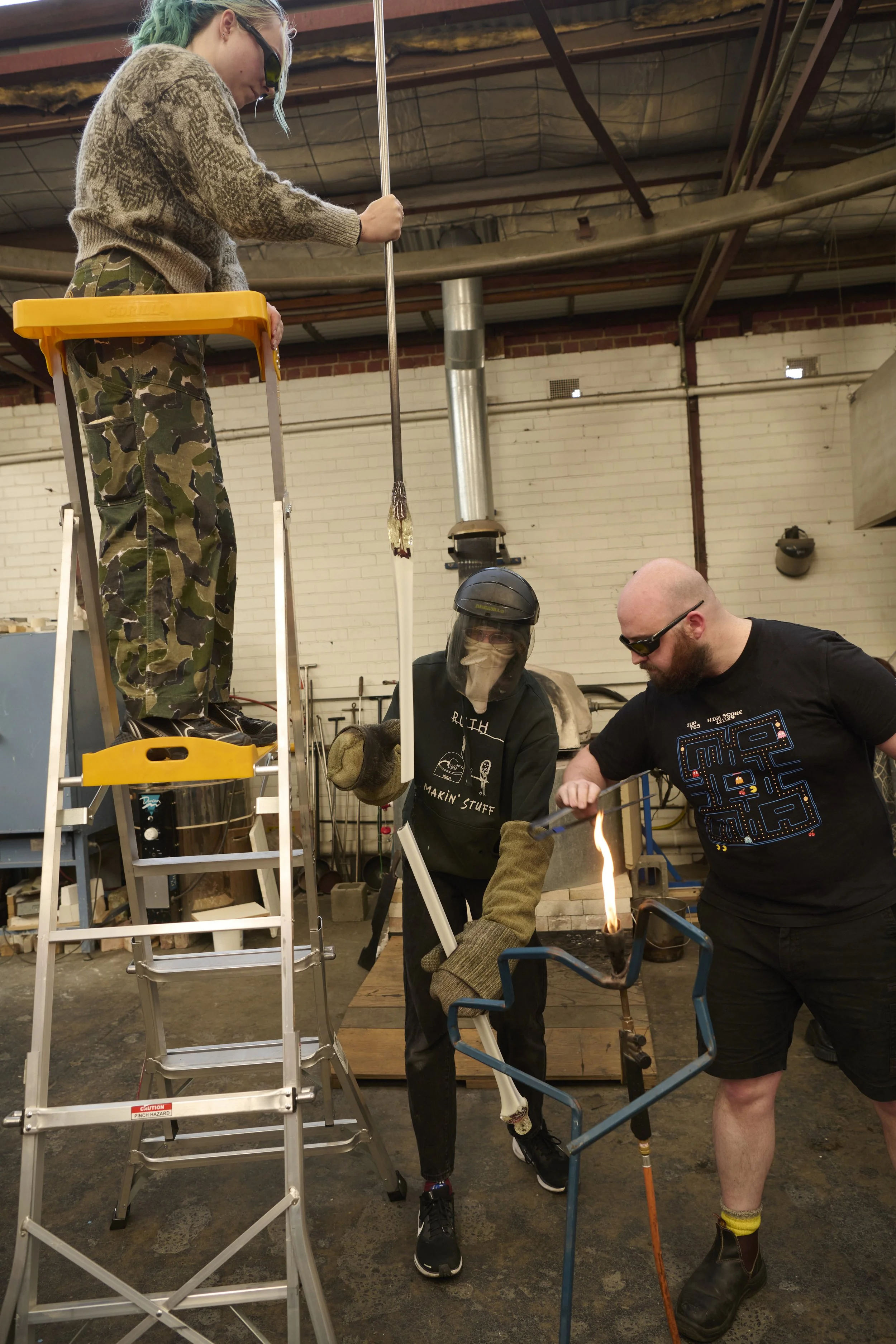
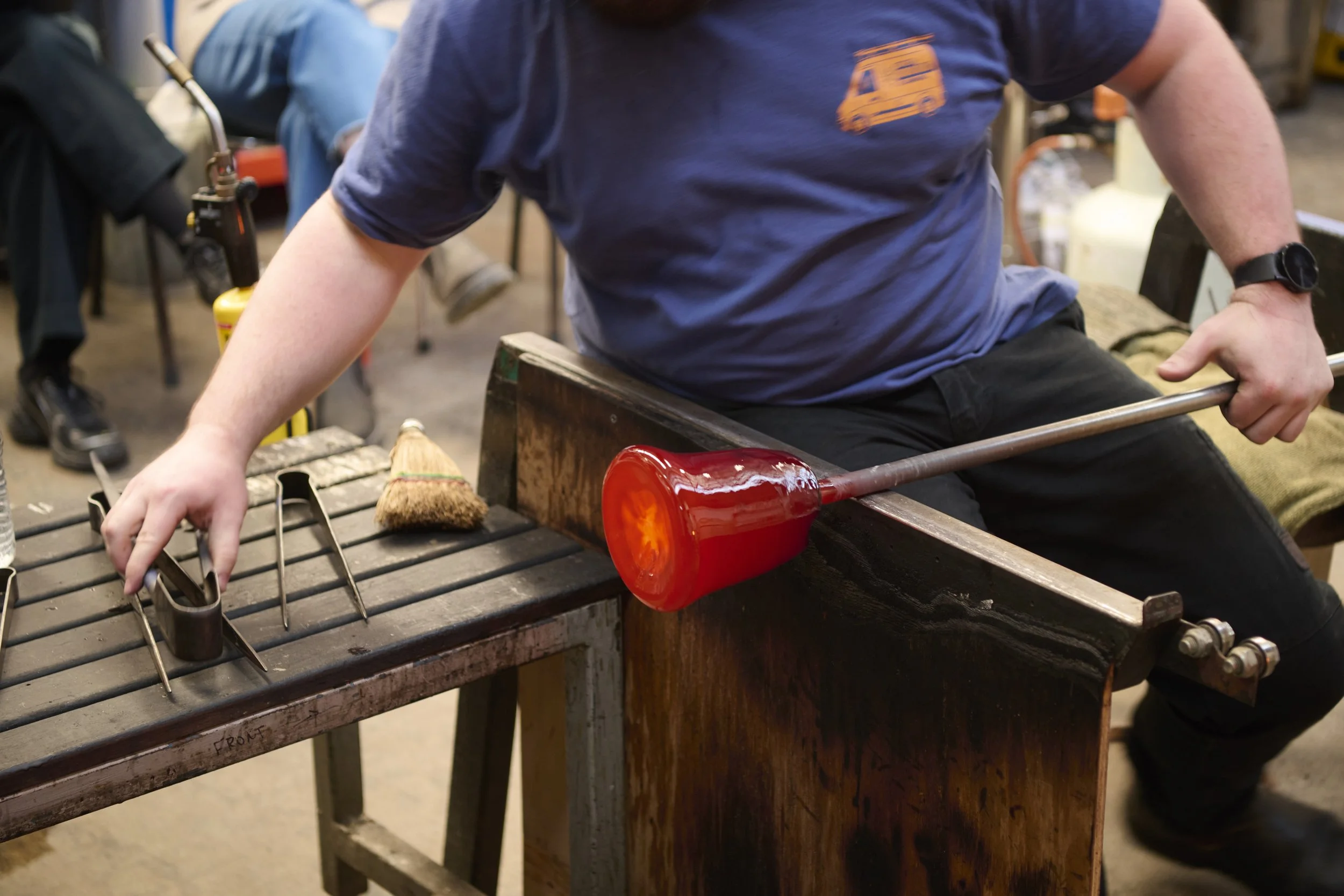
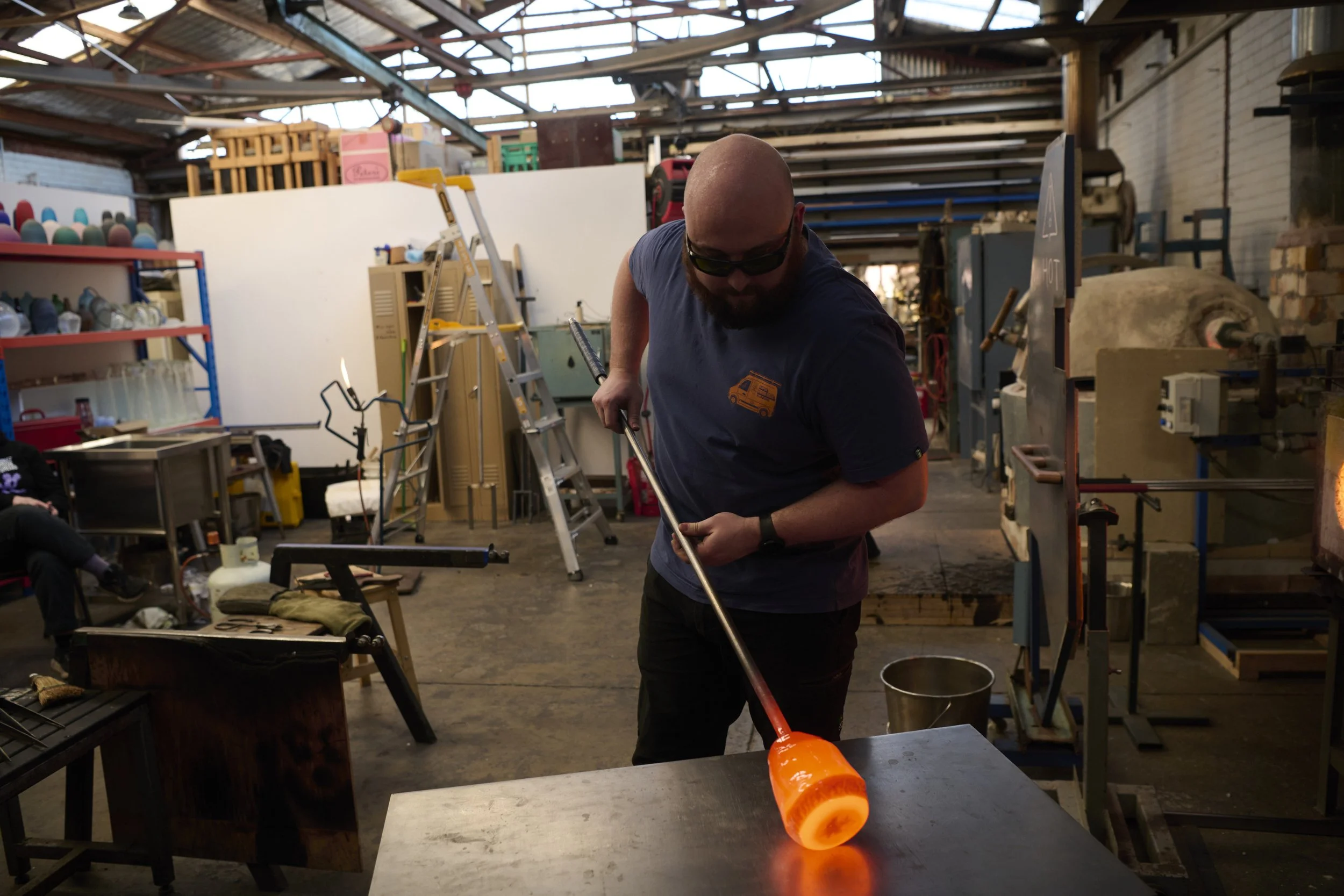
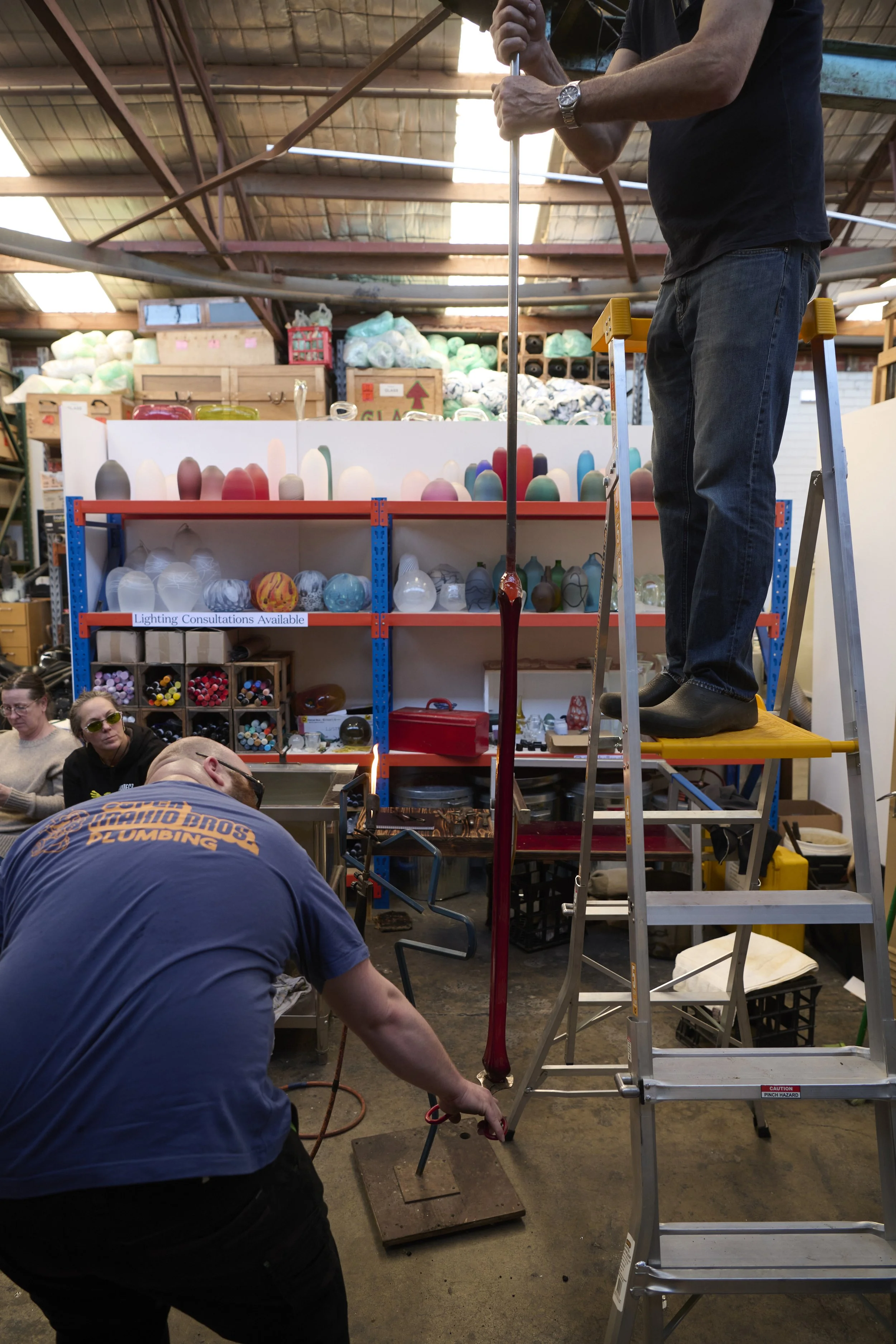
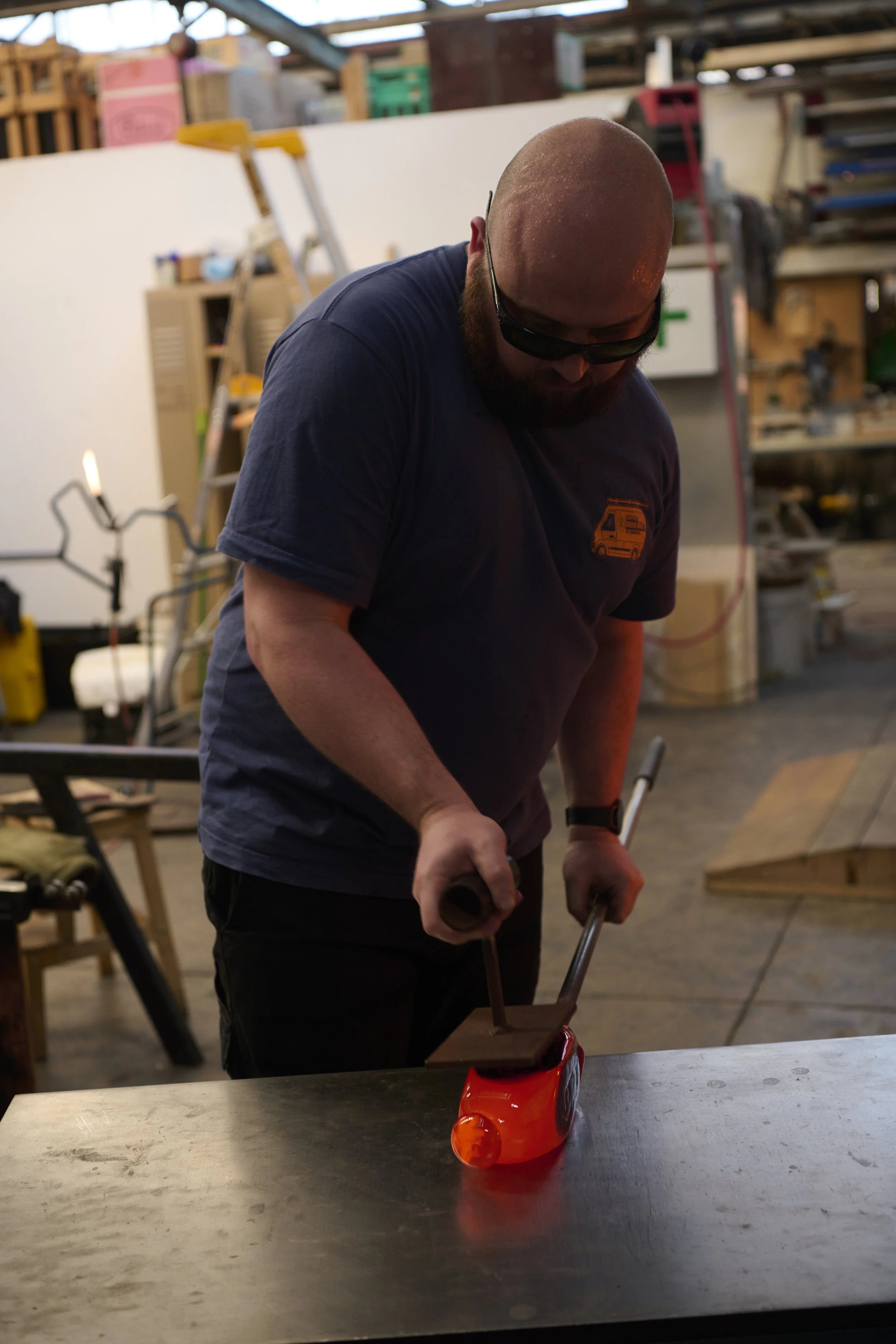
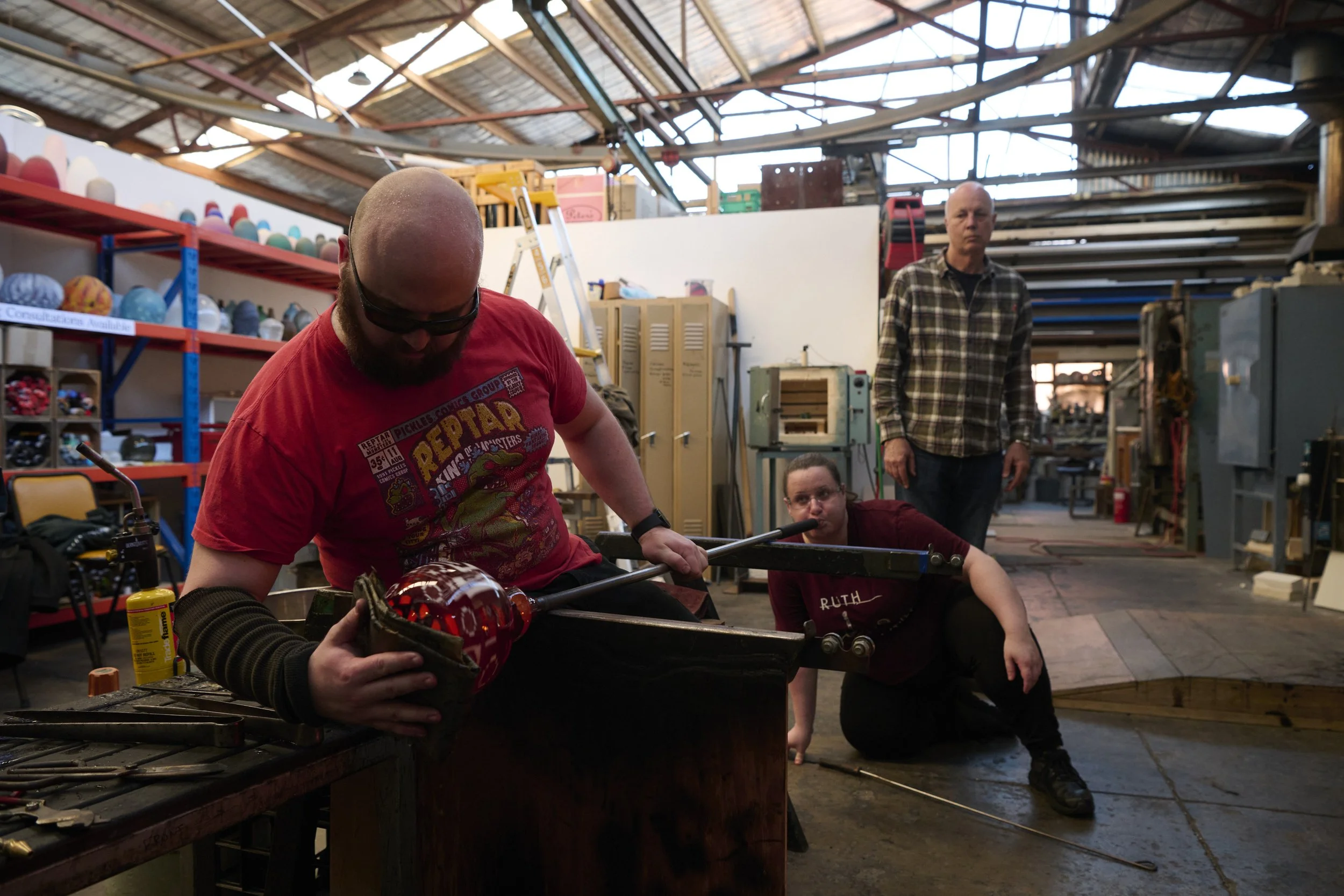
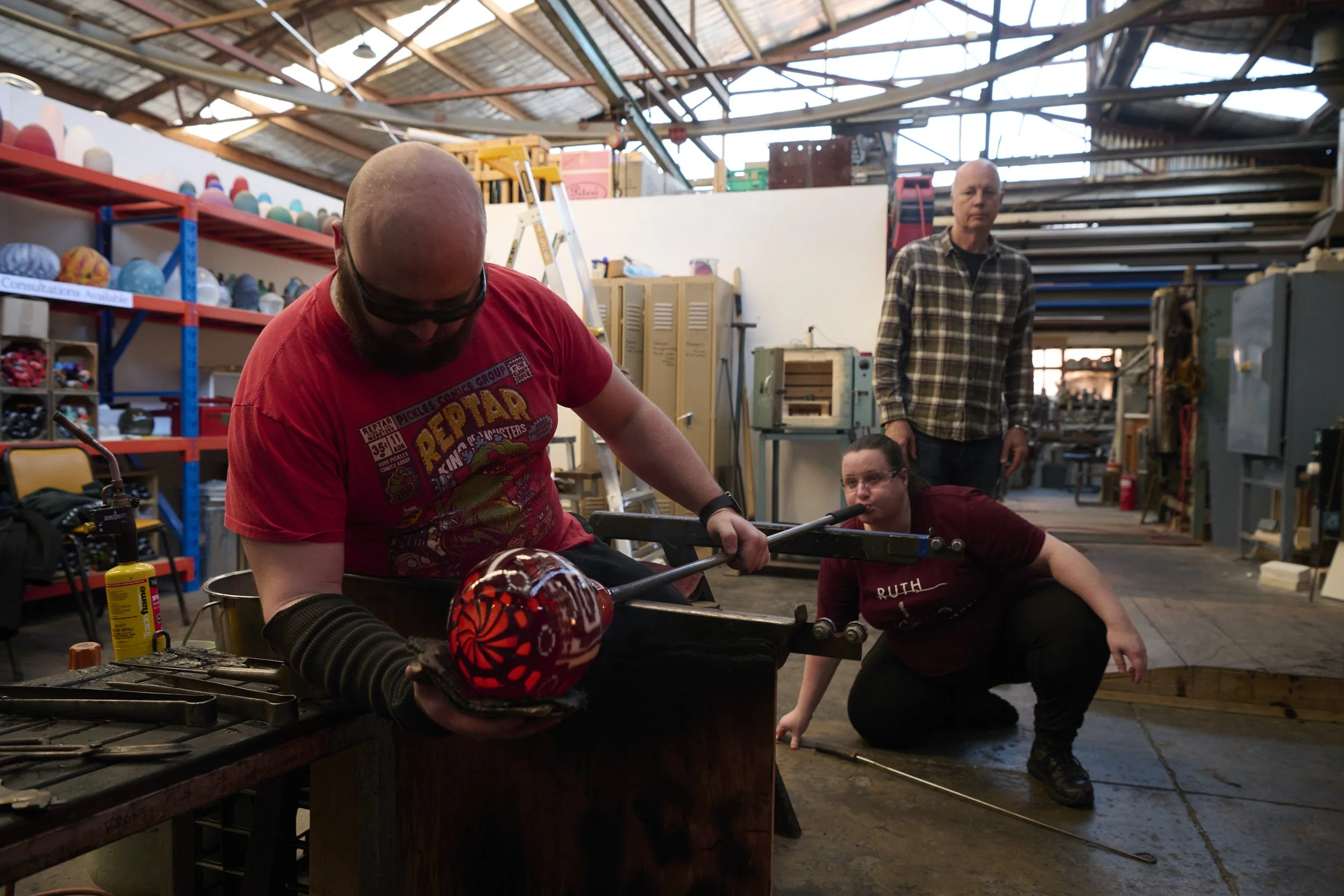
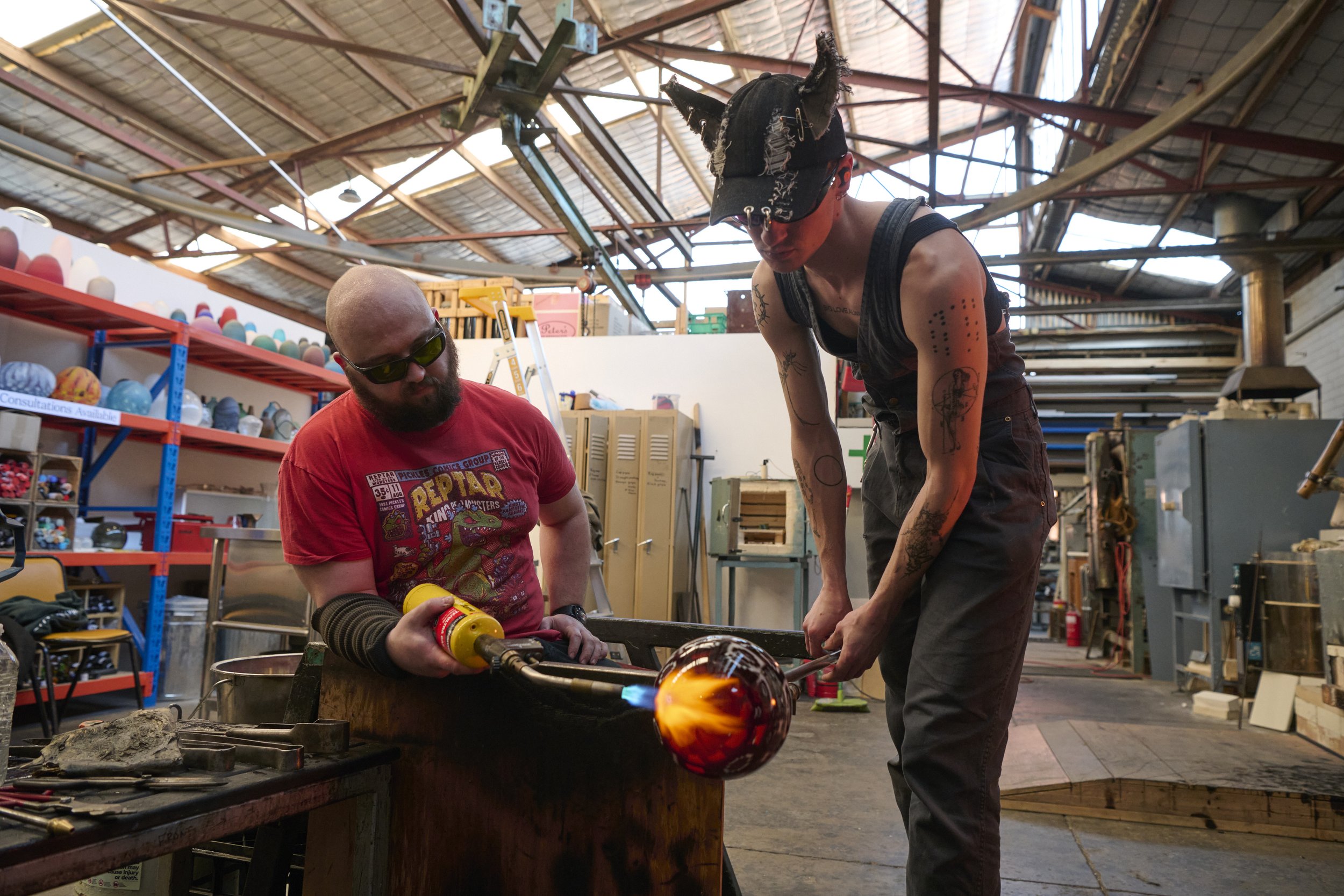
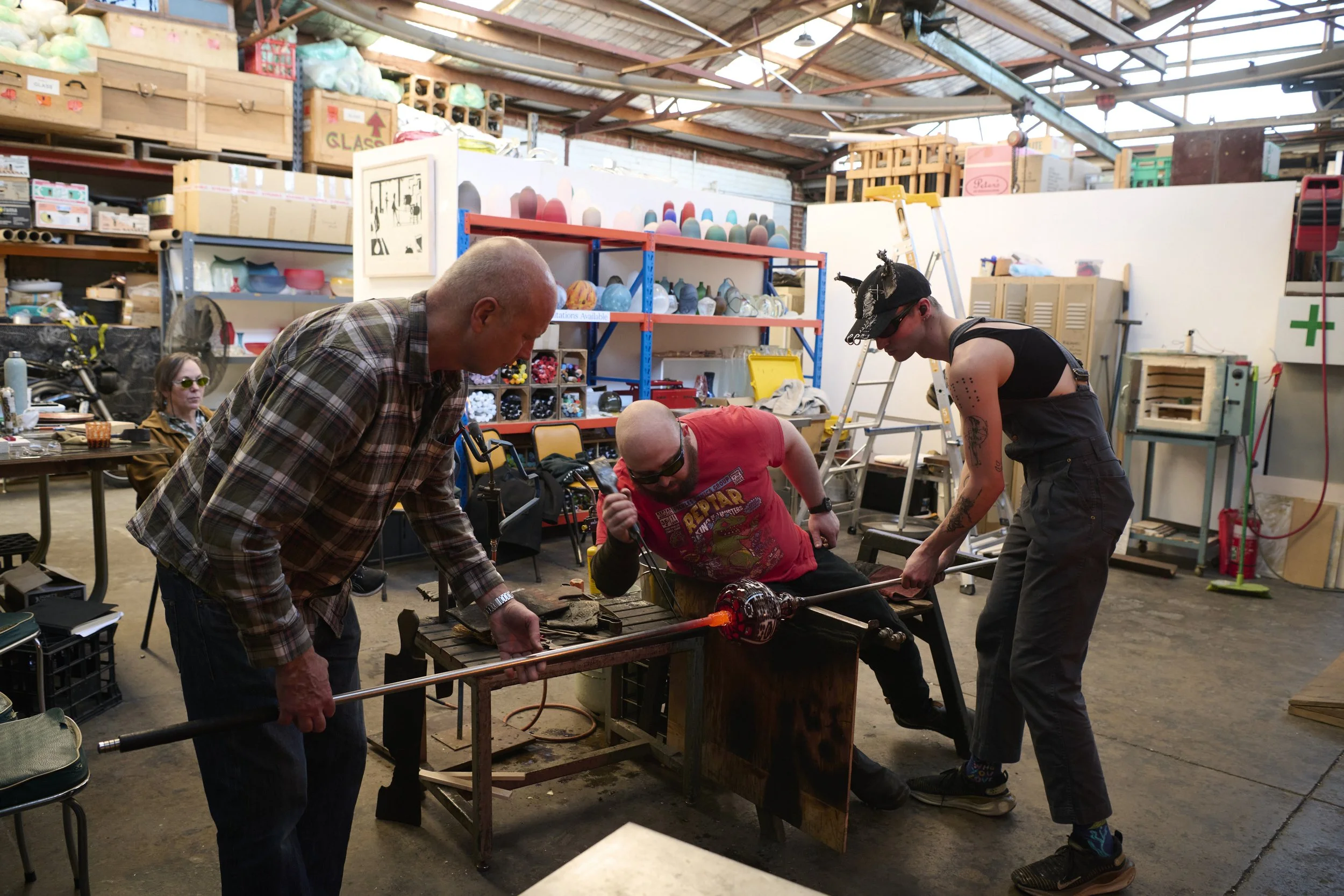
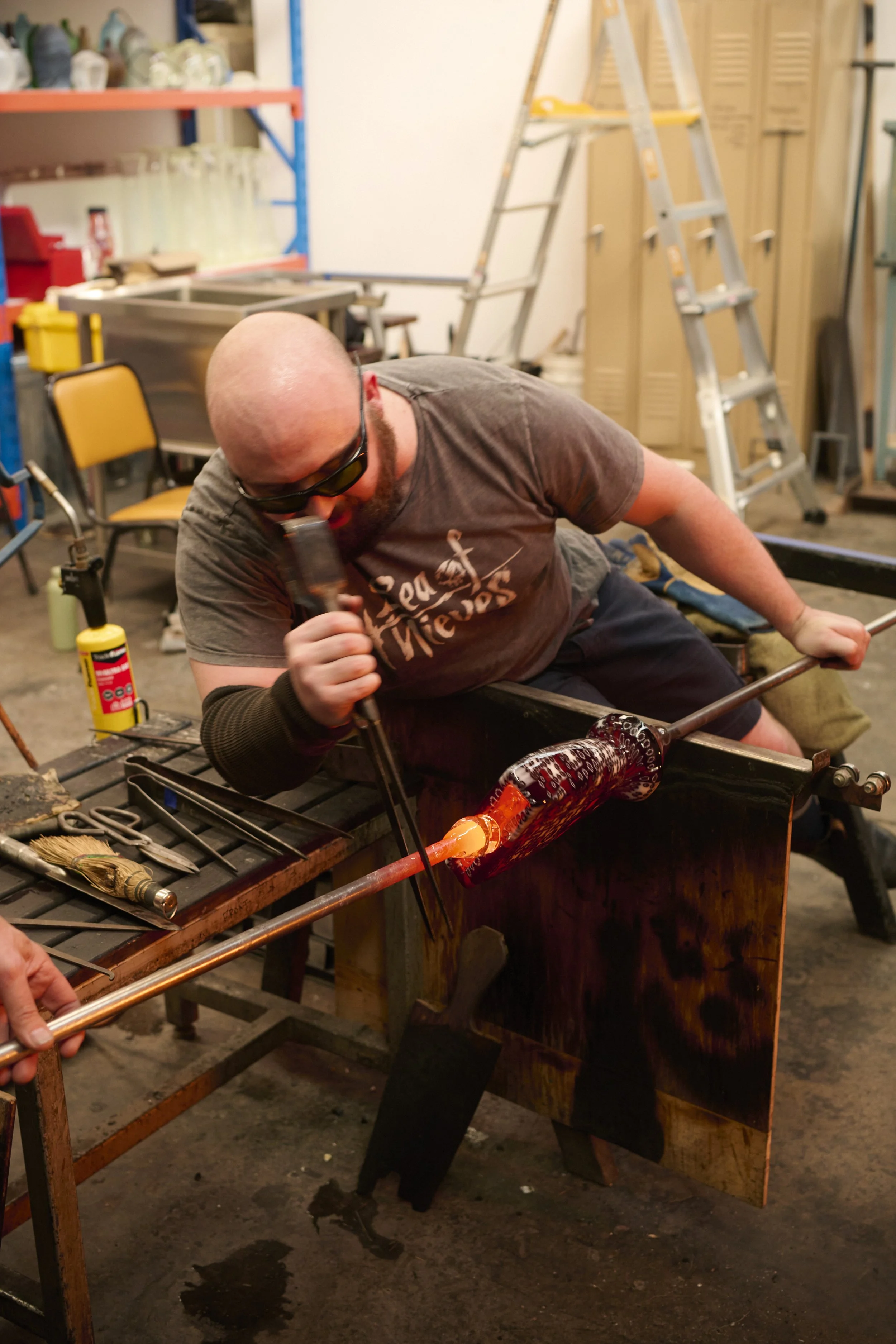
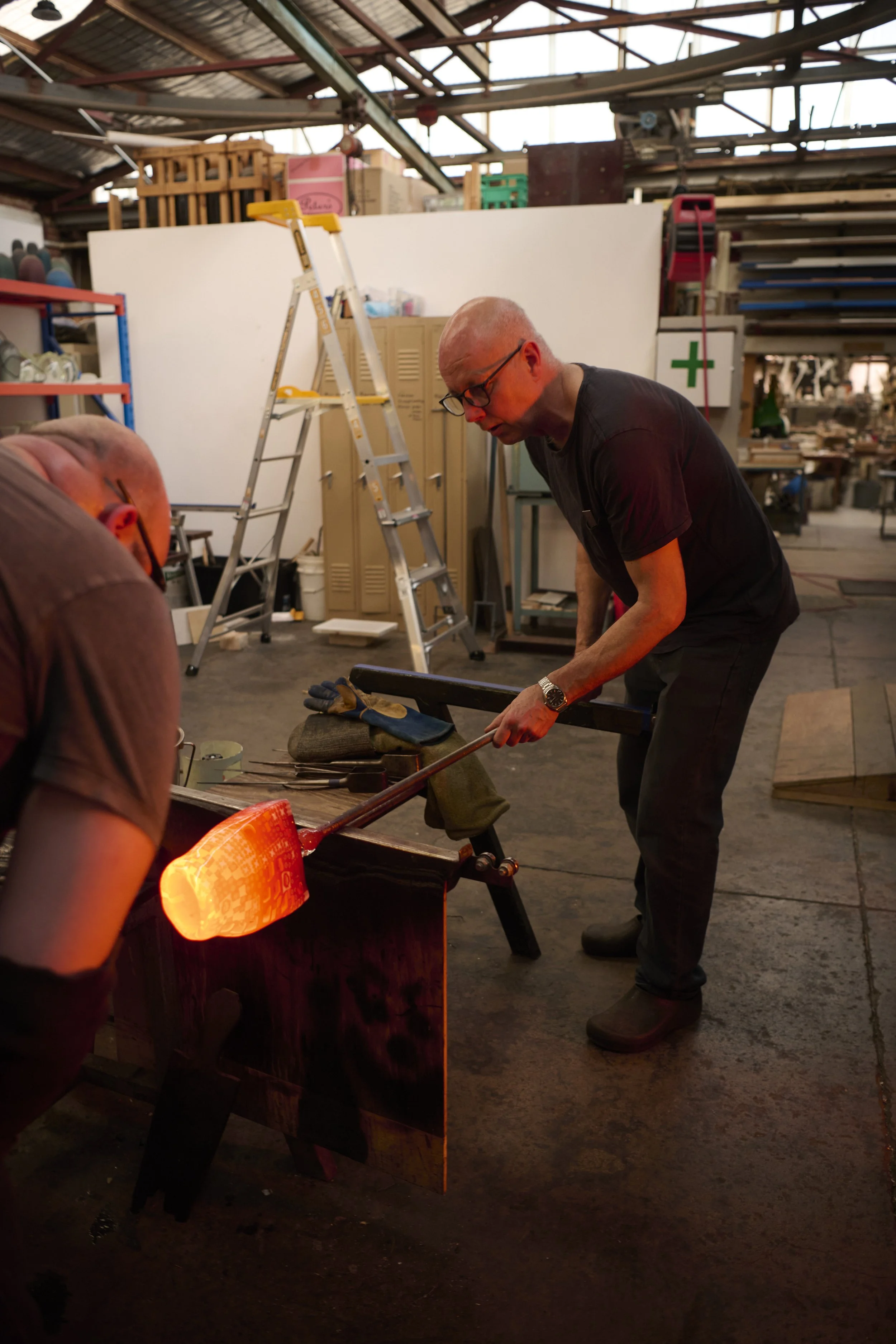
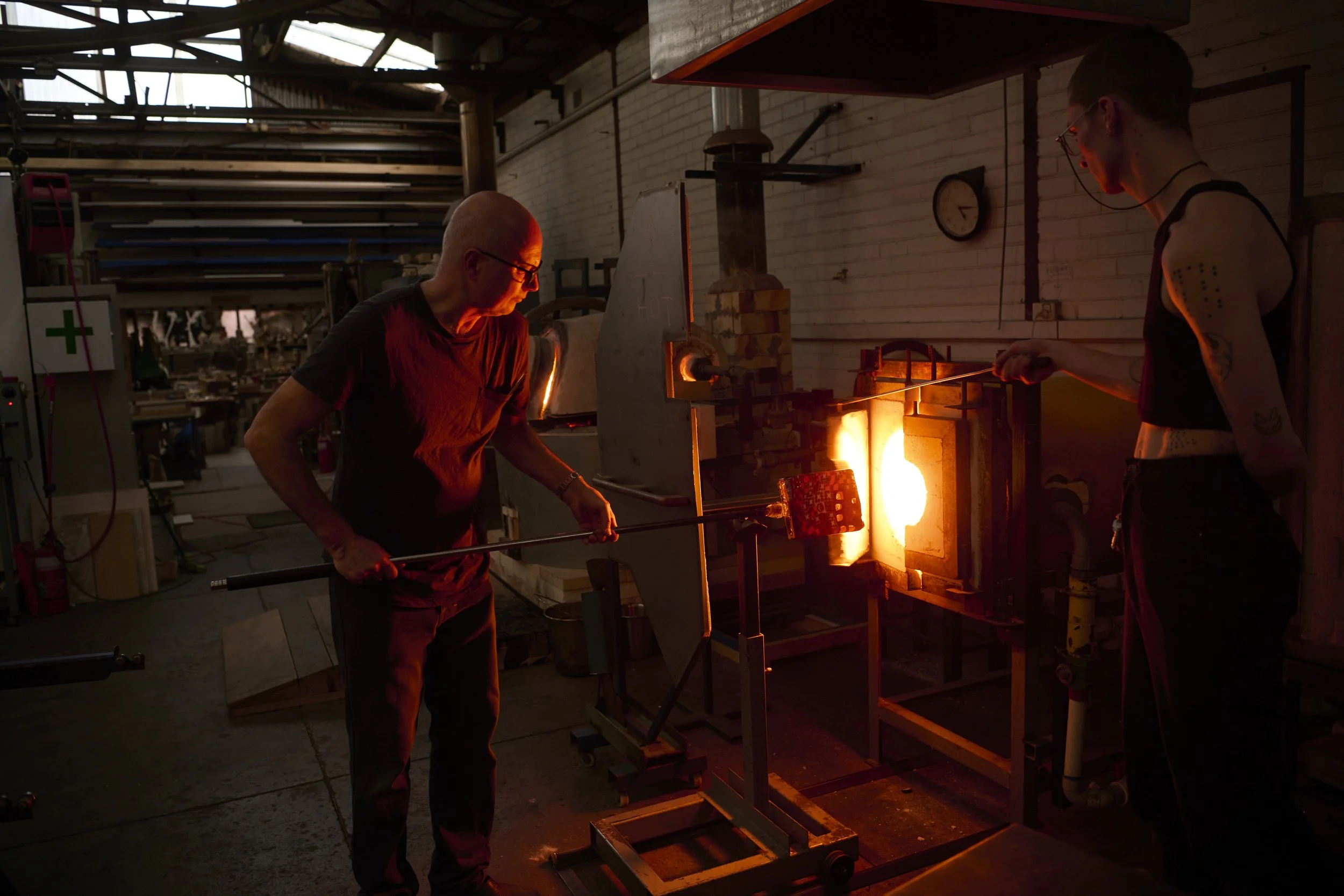
Nick, r.a.g.e’s teaching artist and gaffer, came to the masterclass well-seasoned in cane pulling and Bullseye murrine.
Drawing on techniques learned from a spectrum of teachers over the years, he focused on refining his vessel form — blending technical influence from Giles with a twist of his own distinct style.
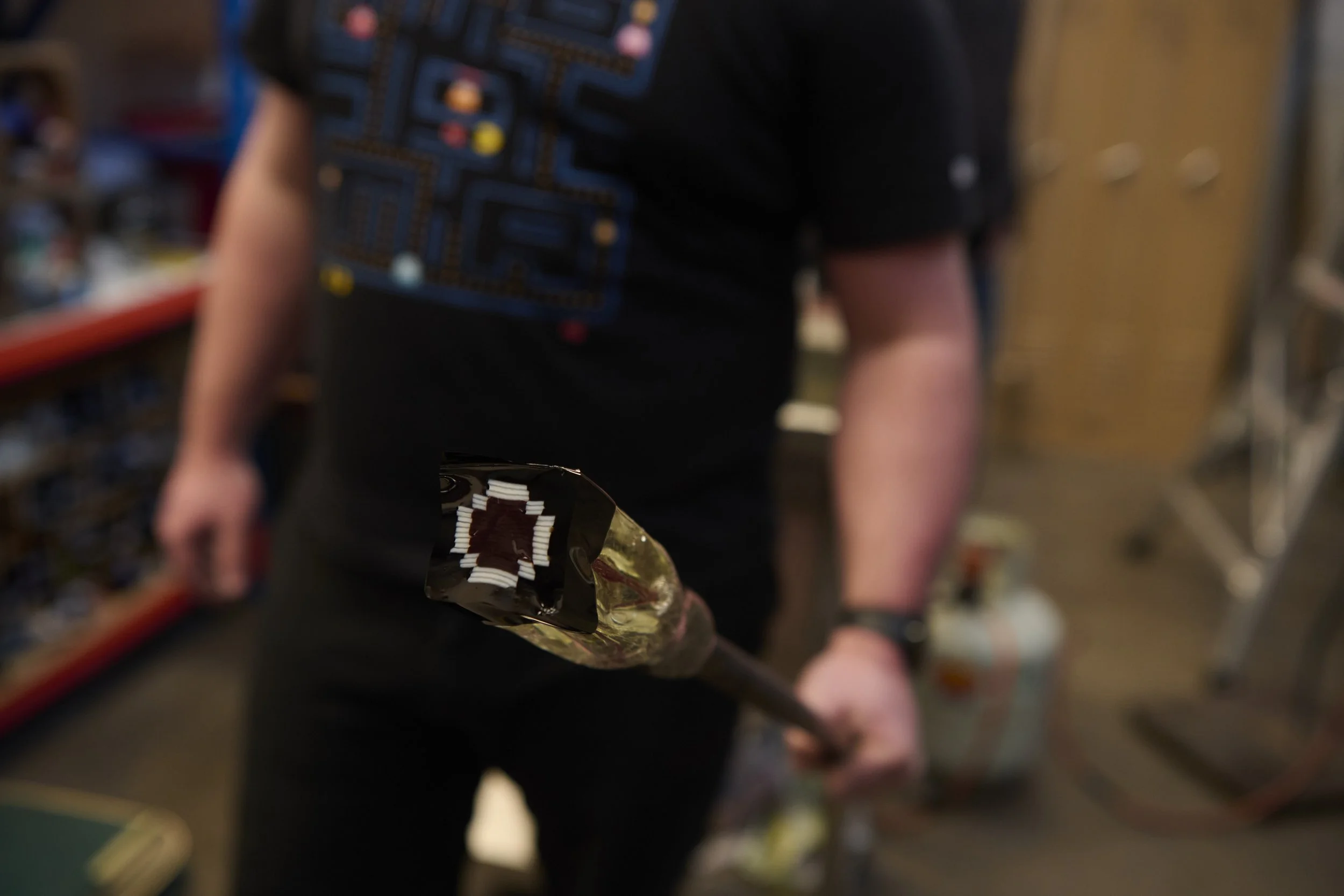
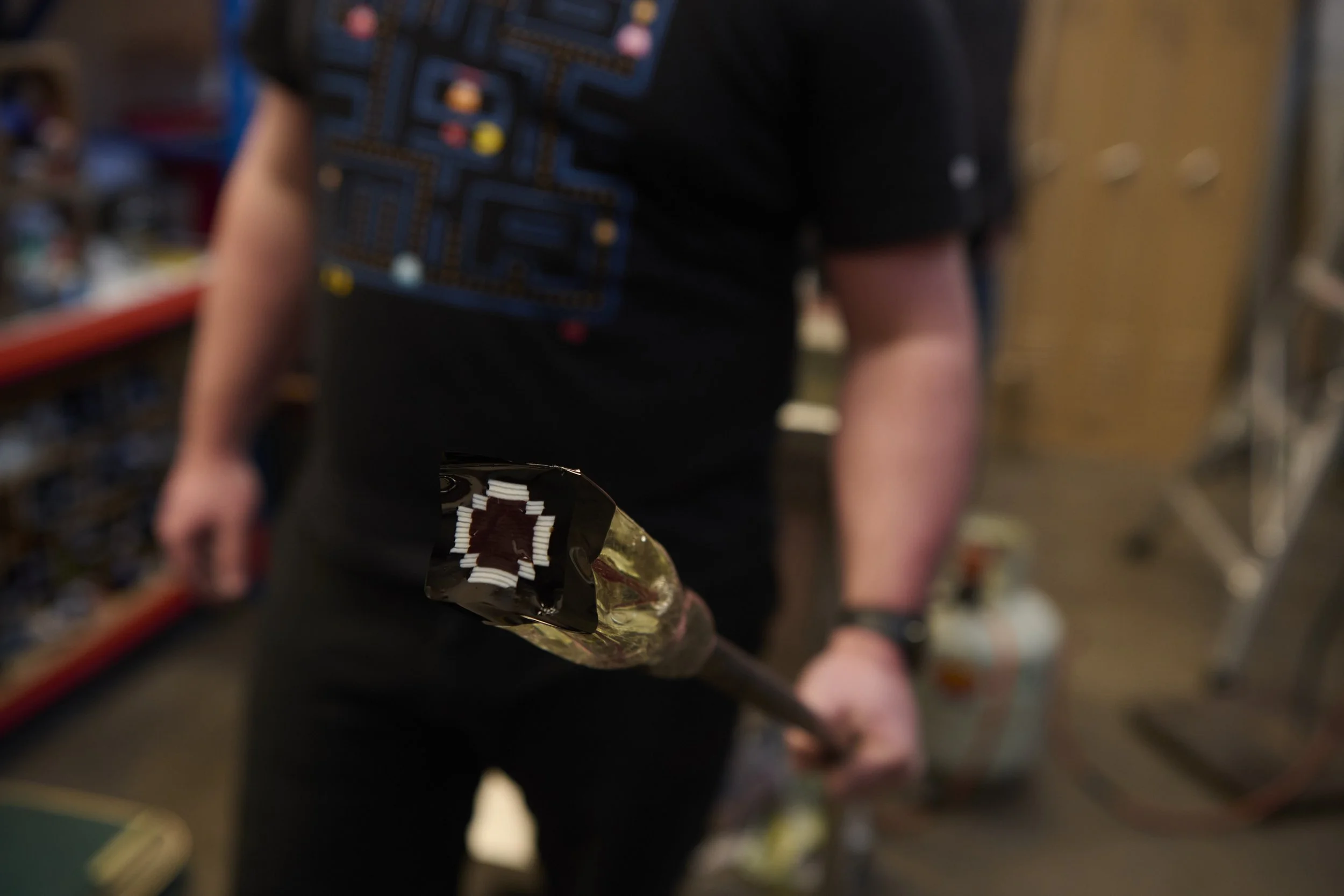
I've always had a fascination with video game graphics, specifically from the original Nintendo Game Boy, and the 8-bit graphics that came with it. The image generation methods employed by these devices resulted in their distinctive and recognisable iconography. When creating murrine using sheet glass, the way the image is assembled is strikingly similar to these old devices. Another similarity is that in these video games the same tiles or sprites would be used repeatedly, just as creating a pattern using murrine.
When choosing the imagery for these works, I looked back at the original Pokémon games as the simplistic nature of the Poké ball would translate well to repetition and pattern. When deciding the form of these vessels, I looked at the games themselves. One referencing what the imagery depicts within the game, the other depicting the cartridge that these games were once housed in.
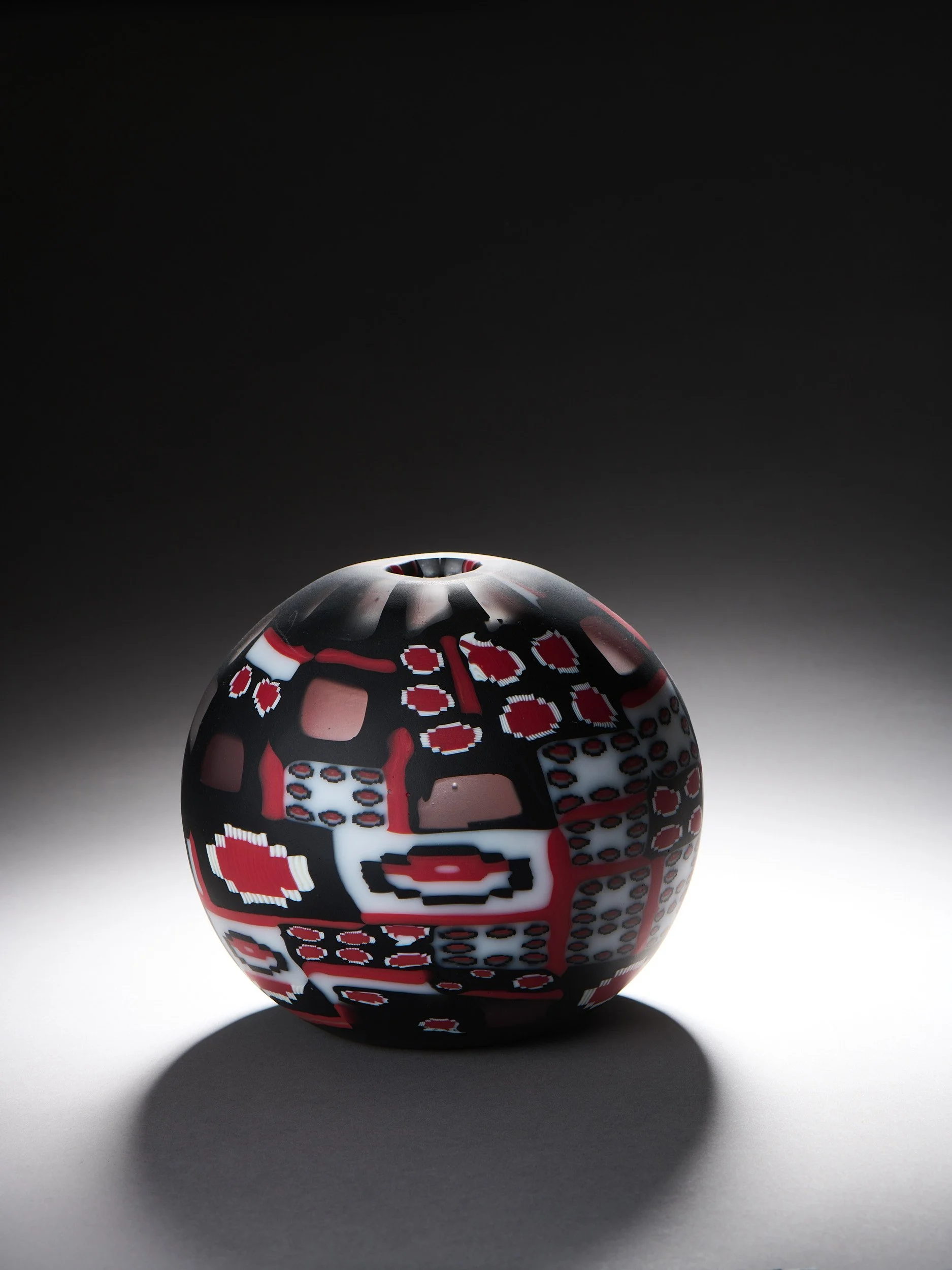
Nostalgia, 2025. Hot formed glass vessel, surface worked, 155 H x 175 W x 175mm D. Photographed by Fred Kroh.